Every Agent. Every
Transaction. One Dashboard.
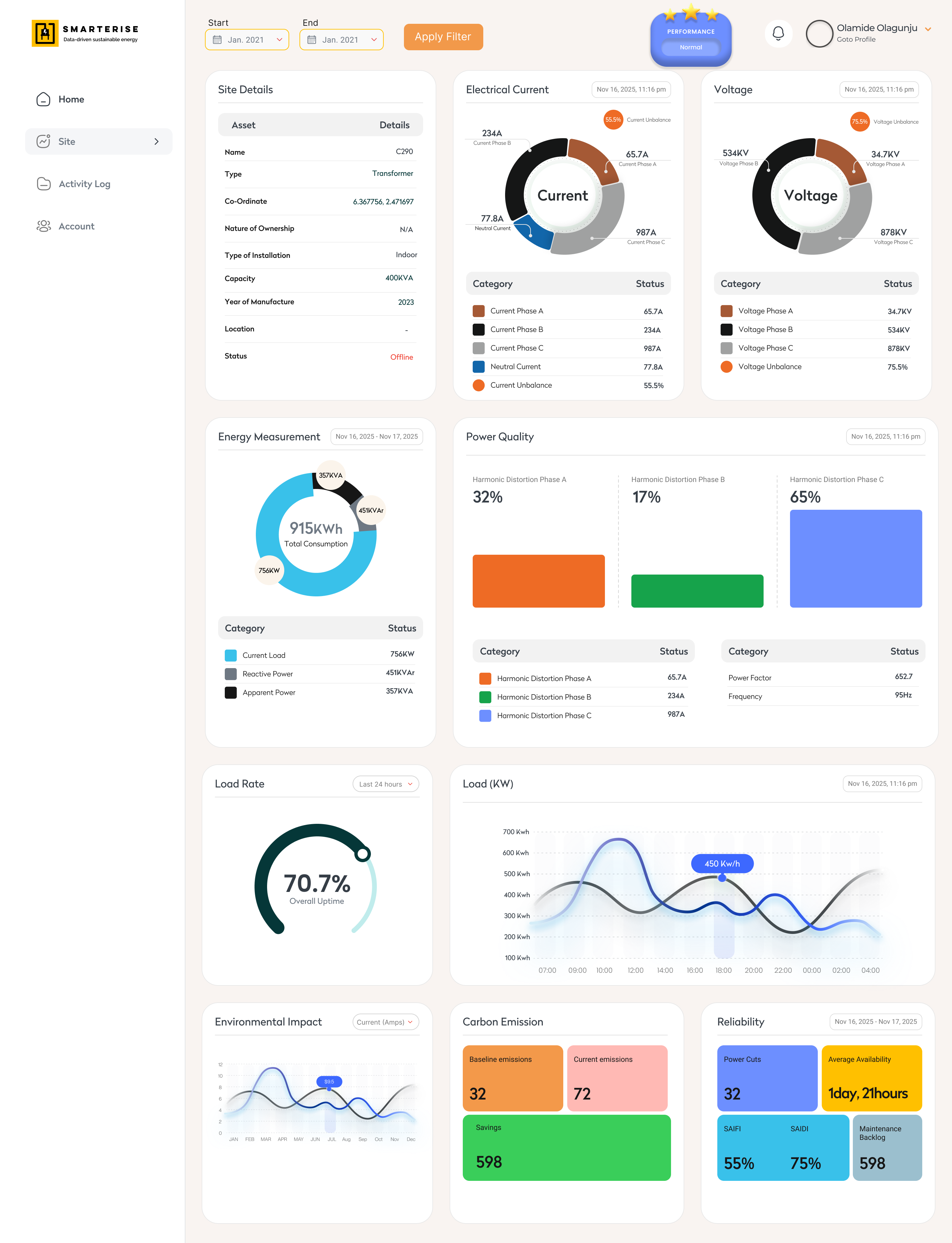
A desktop-first fintech operations control center for managing agents, KYC, POS terminals, settlements, loans, transactions, and system configuration across an agency banking network at scale.
The admin controls
behind every transaction.
Eight representative screens from a 257+ screen admin system, covering the most critical operational modules from agent management to system-level configuration.
Product Designer,
Admin Platform.
Owned the admin dashboard end-to-end, from information architecture through every screen state across 257+ screens.
Agency banking at scale
needs serious tooling.
Payrail powers a network of human agents serving as payment touchpoints in underserved communities. Managing that network demands a powerful back-office: onboarding, KYC verification, POS deployment, settlements, loans, and full transaction monitoring across the operation.
The challenge: operators scan hundreds of rows daily but also make compliance-critical, irreversible decisions. The platform had to make fast scanning and careful decision-making feel equally natural on the same surface.
One platform.
Eight operational domains.
A unified control center. Internal teams see, control, and resolve every layer of the operation from one surface.
Decisions in one layer affect downstream access: KYC approval gates POS assignment; POS assignment enables transaction capability; transaction health informs loan eligibility.
Two dashboards.
One complete picture.
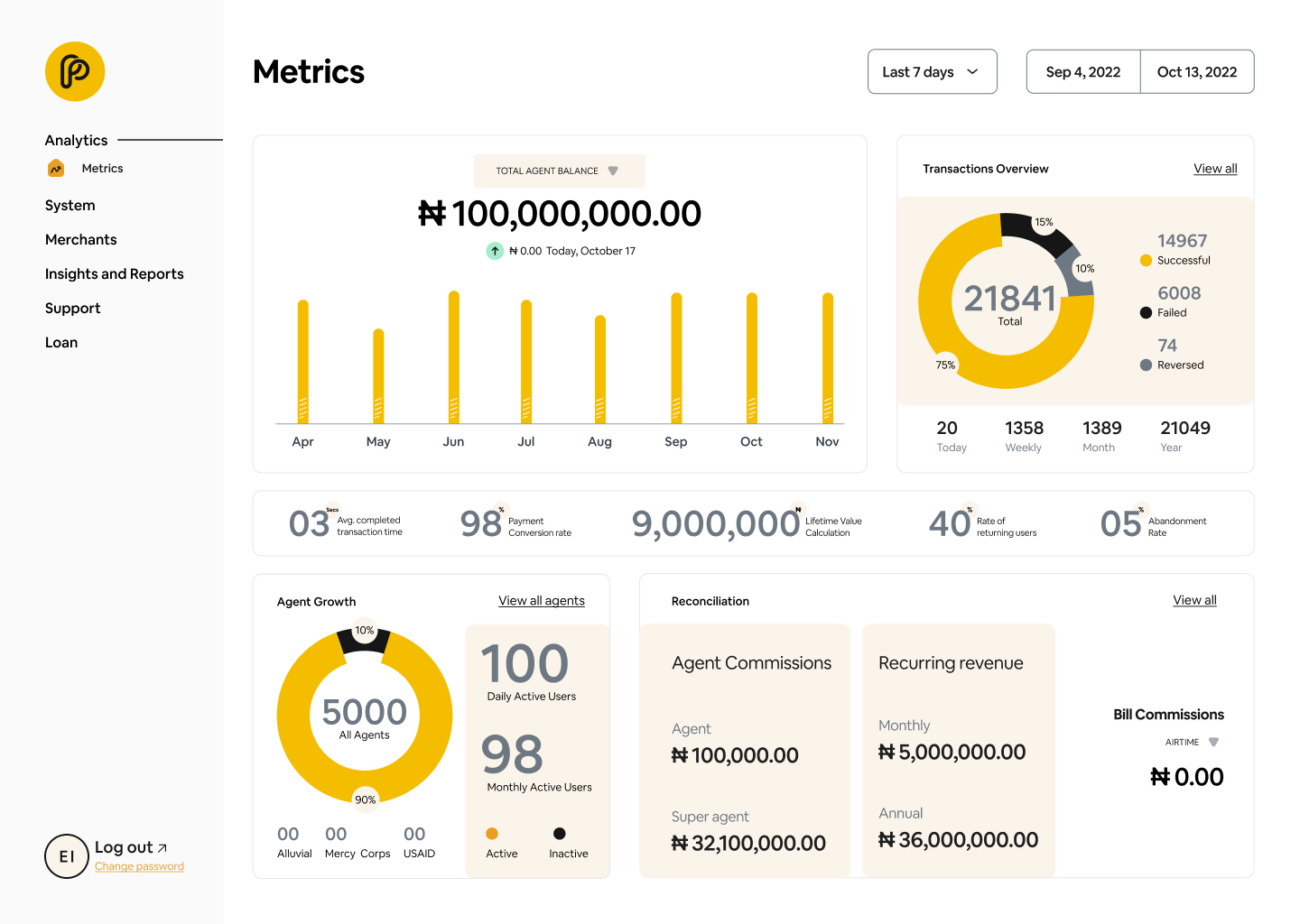
Two focused dashboards: agent network performance and loan portfolio health. Critical metrics, alerts, and status signals above the fold. No digging.
Click to expand
Active agent count, transaction volumes, and network revenue at a glance.
 Click to expand
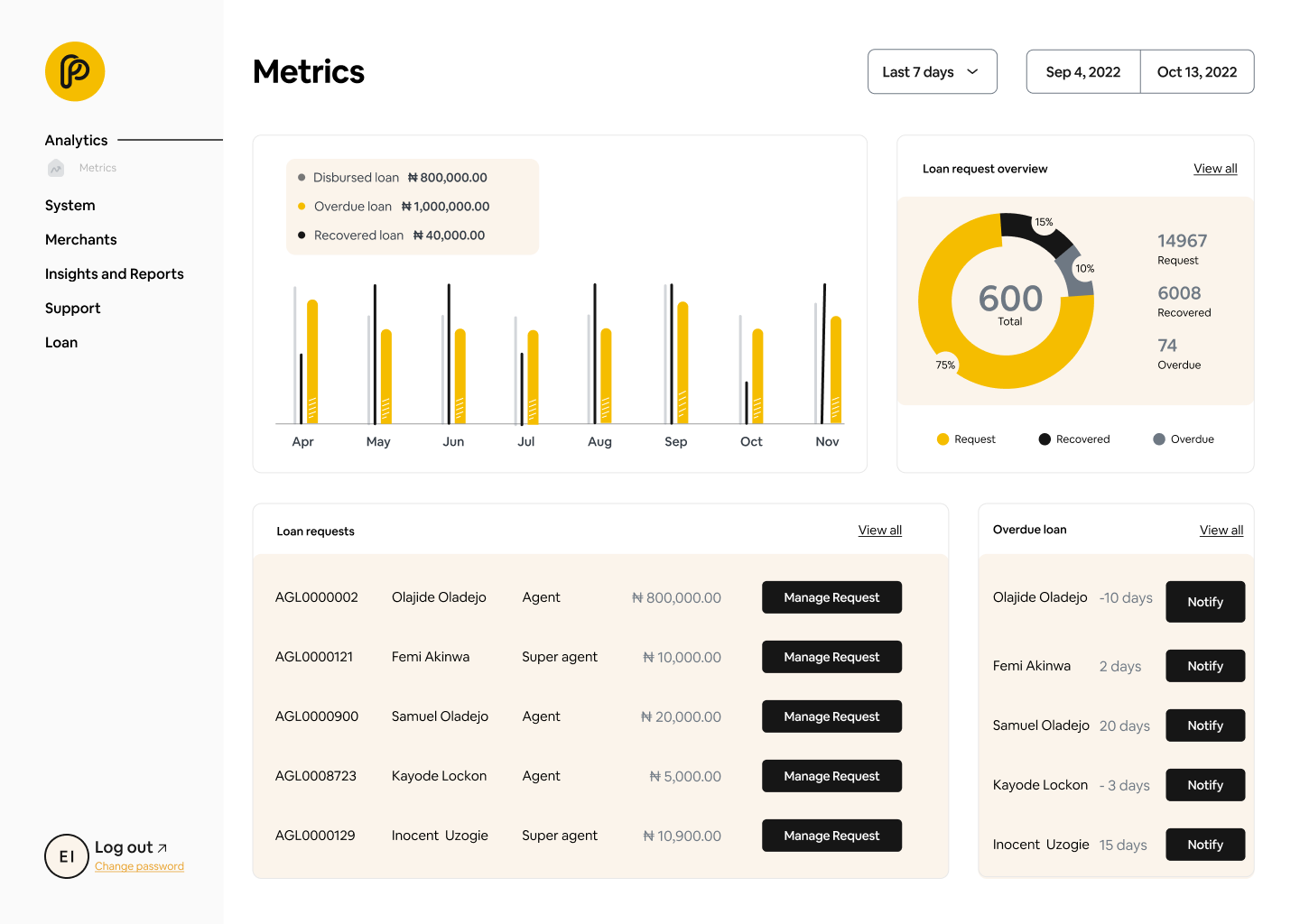
Loan portfolio overview with disbursements, repayment rates, and default indicators.
From onboarding to
full account control.
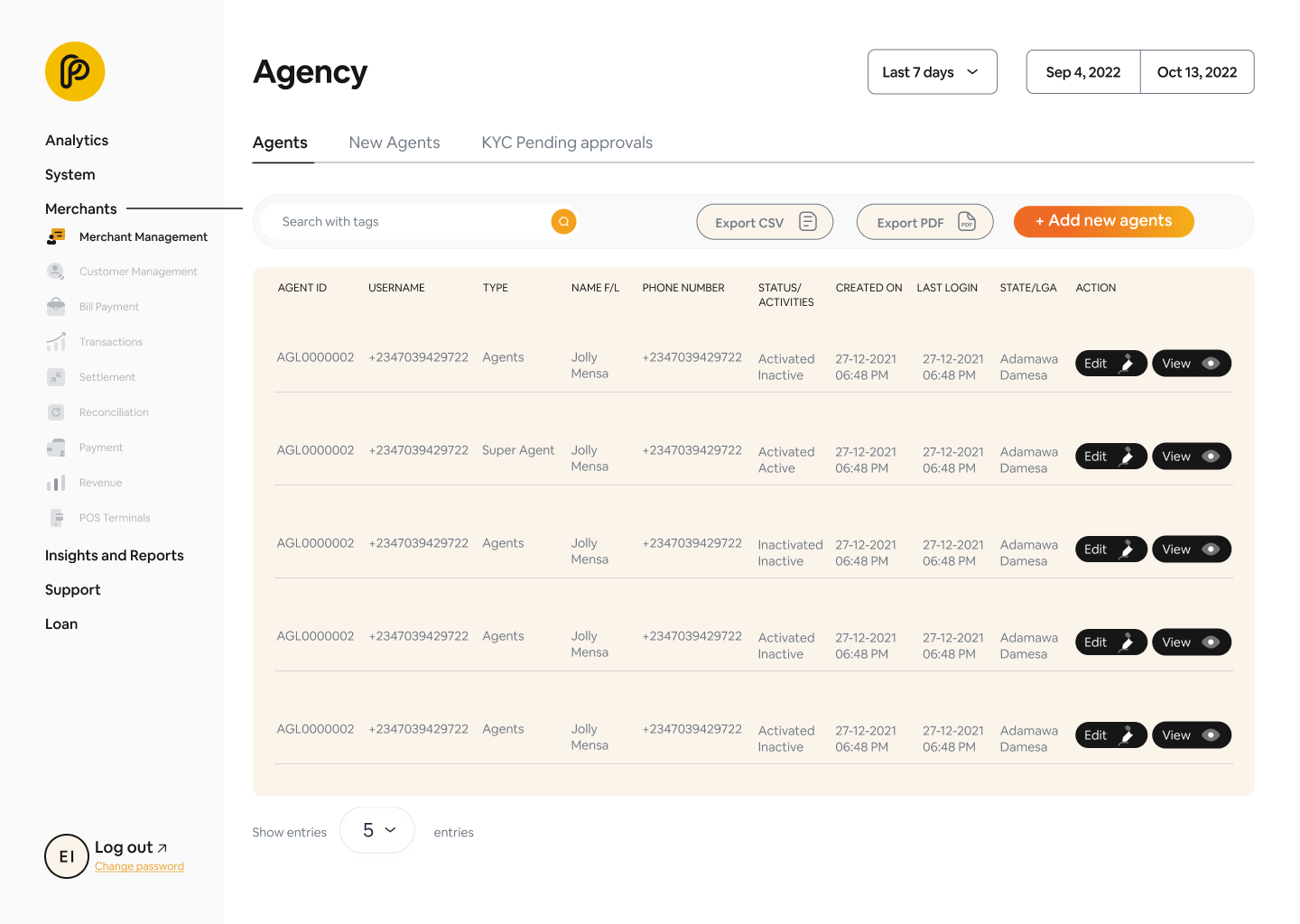
The Agency module covers the full agent lifecycle: identity review, account access, revenue monitoring, and high-stakes actions built for compliance-sensitive decisions.
Click to expand
Searchable agent directory with status badges, tier levels, and inline action controls.
Click to expand
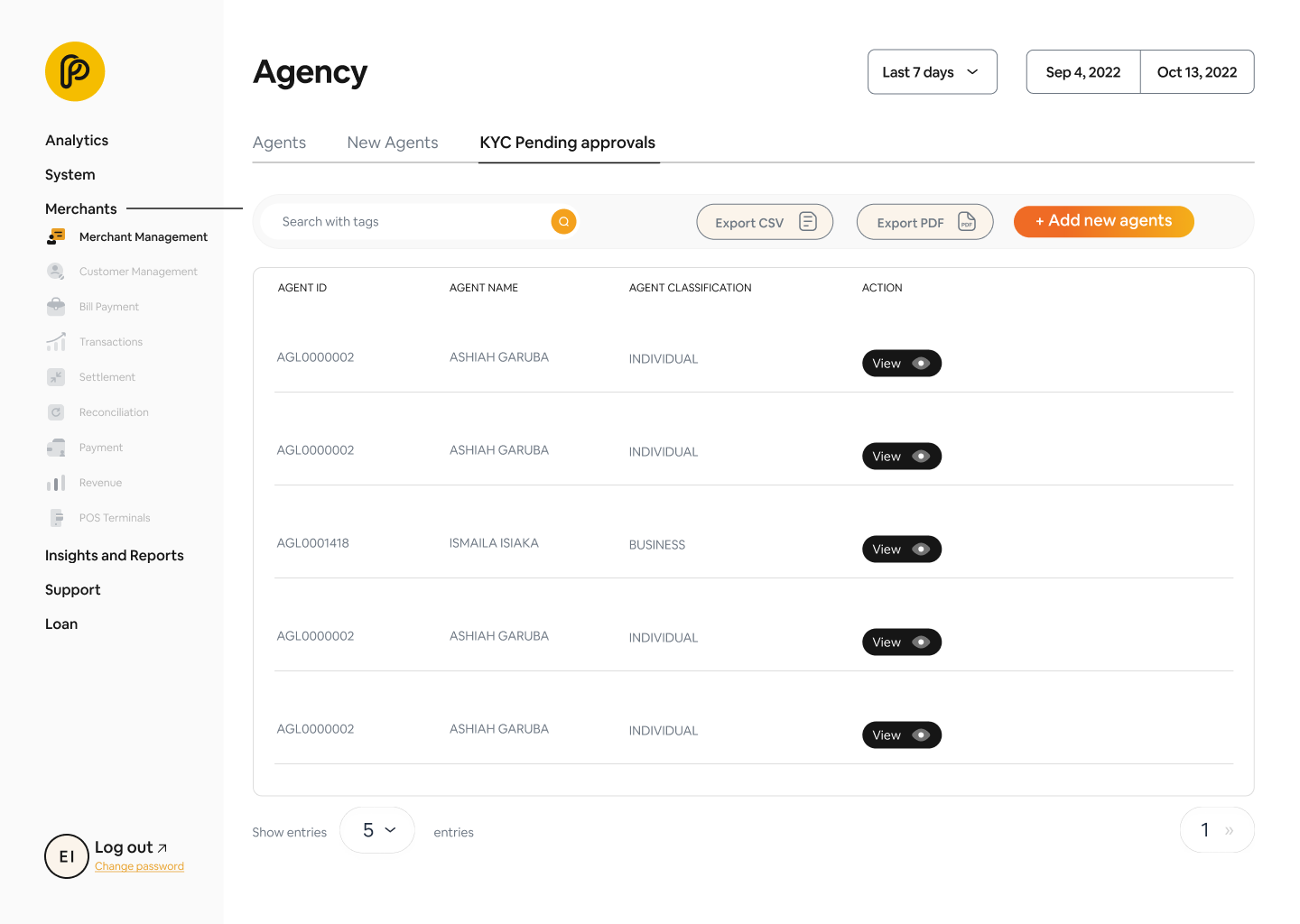
Compliance review queue. Approve, decline, and flag on every identity submission.
 Click to expand
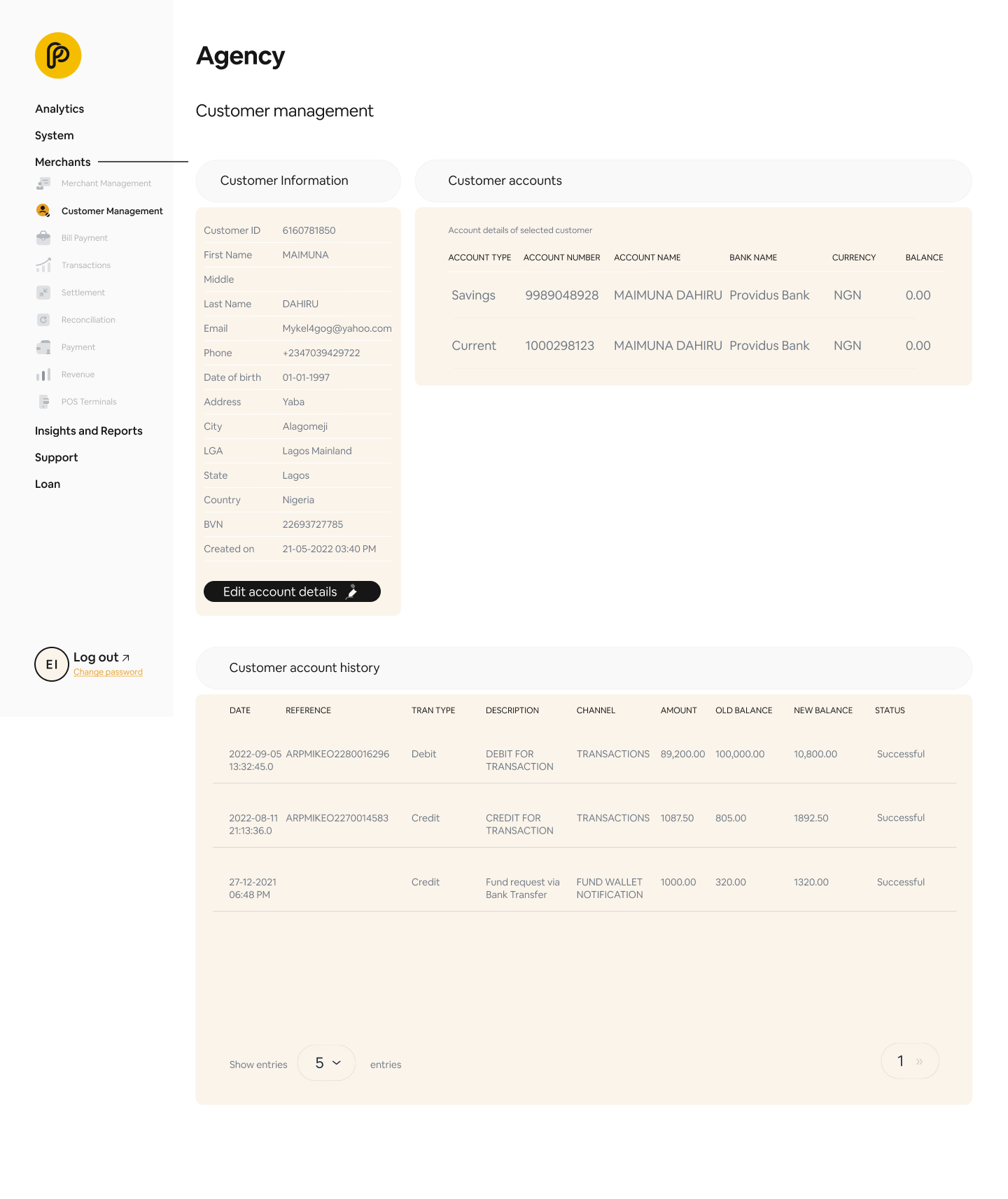
Full customer profile with transaction history, contact info, and account controls.
 Click to expand
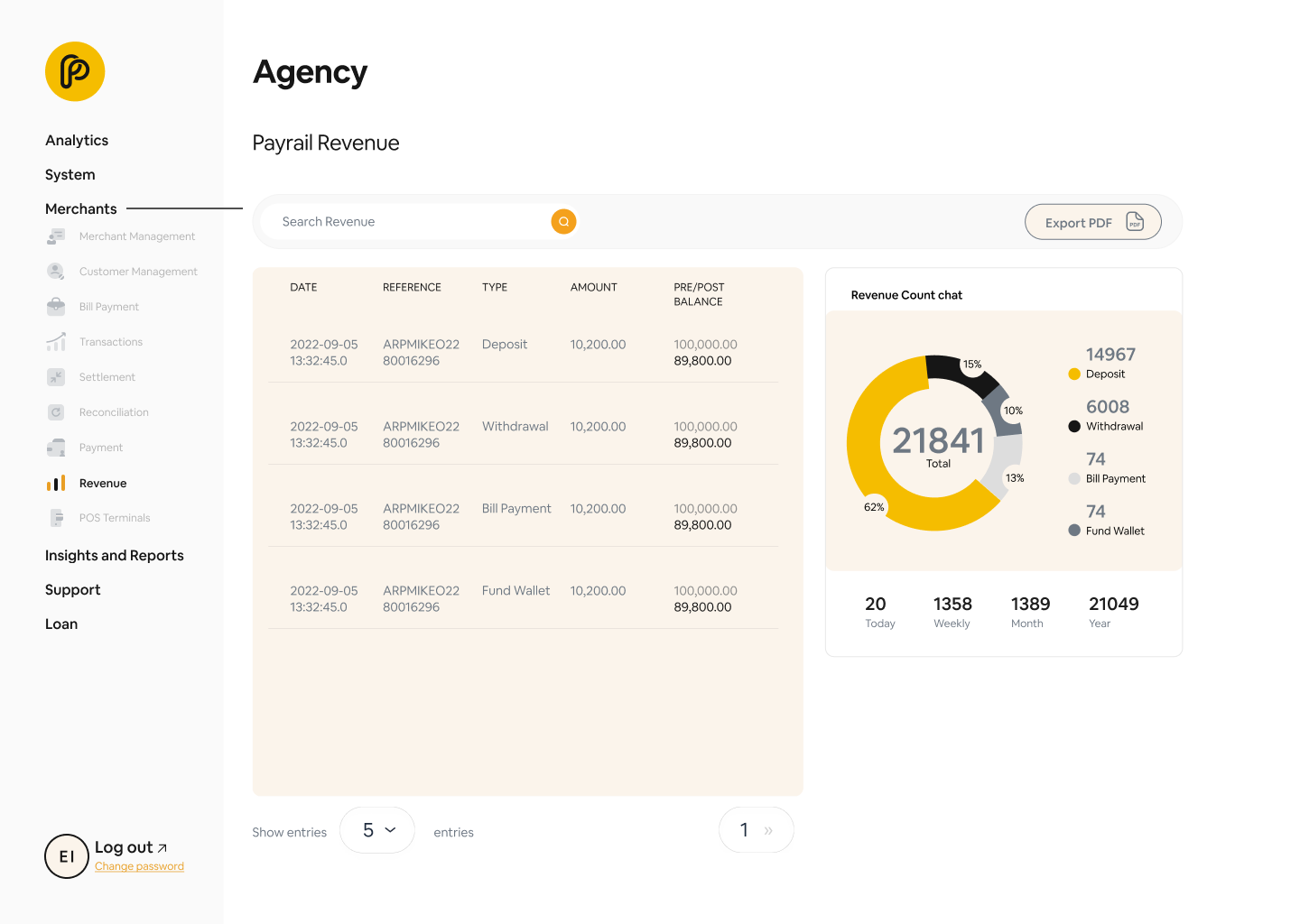
Commission earnings and revenue breakdown by channel and payout period.
Hardware and money,
both accounted for.
Physical assets with a defined lifecycle. Financial settlement as the counterpart. Both demand precision and clear state at every step.
Click to expand
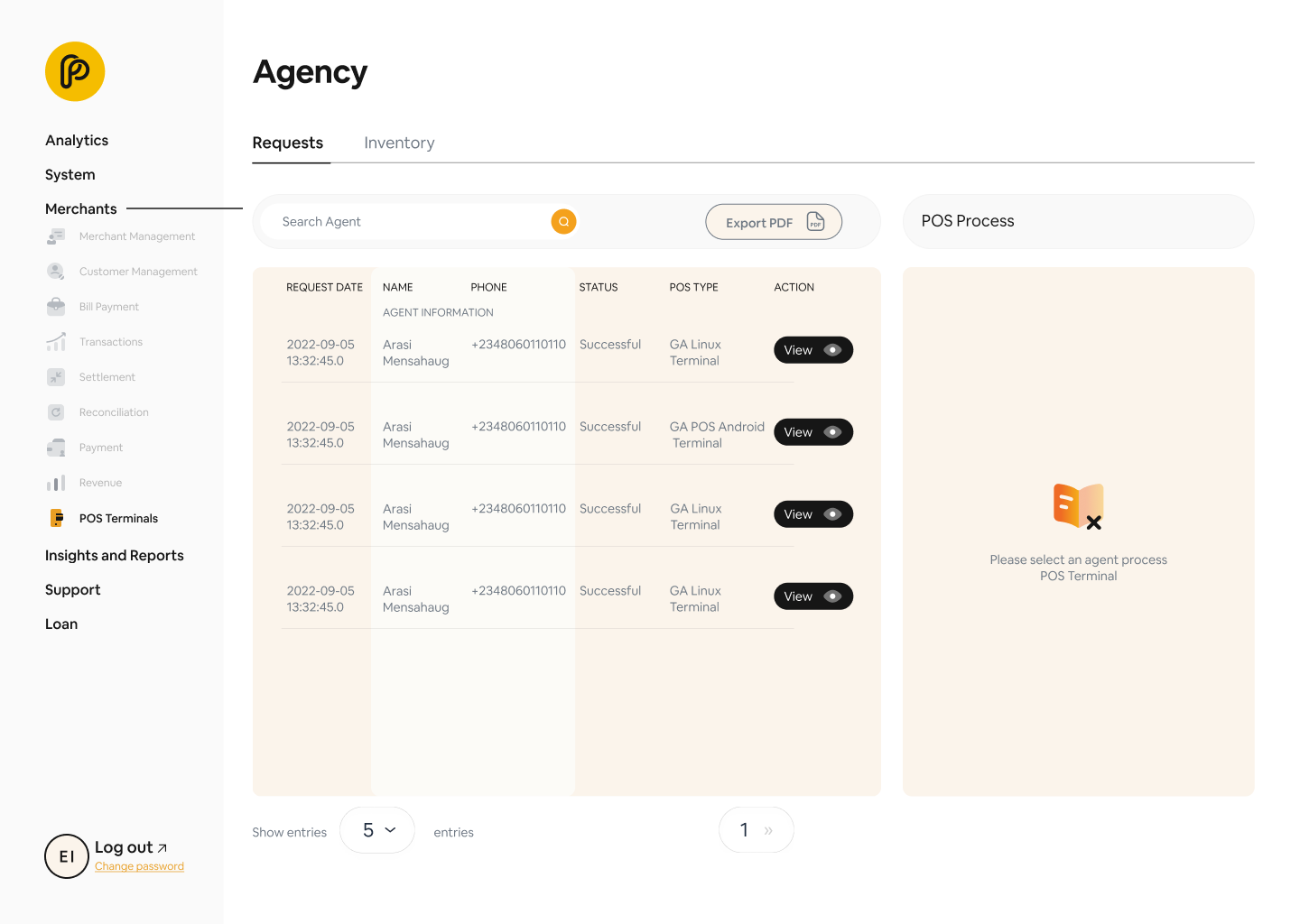
Terminal inventory, status-driven to prevent invalid lifecycle actions.
Click to expand
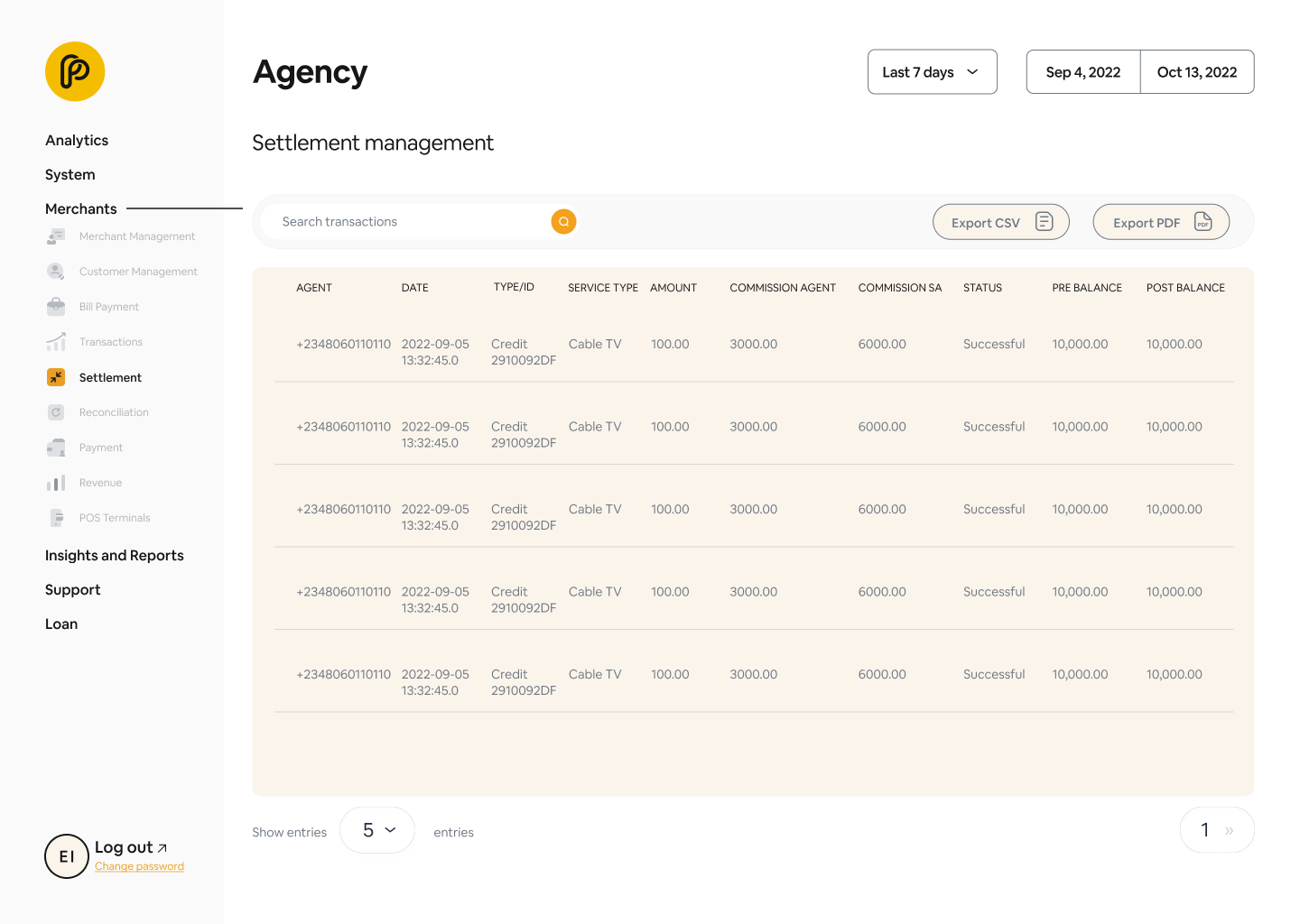
Agent payout tracking with settlement status, date filtering, and reconciliation controls.
Every naira. Every agent.
Fully traceable.
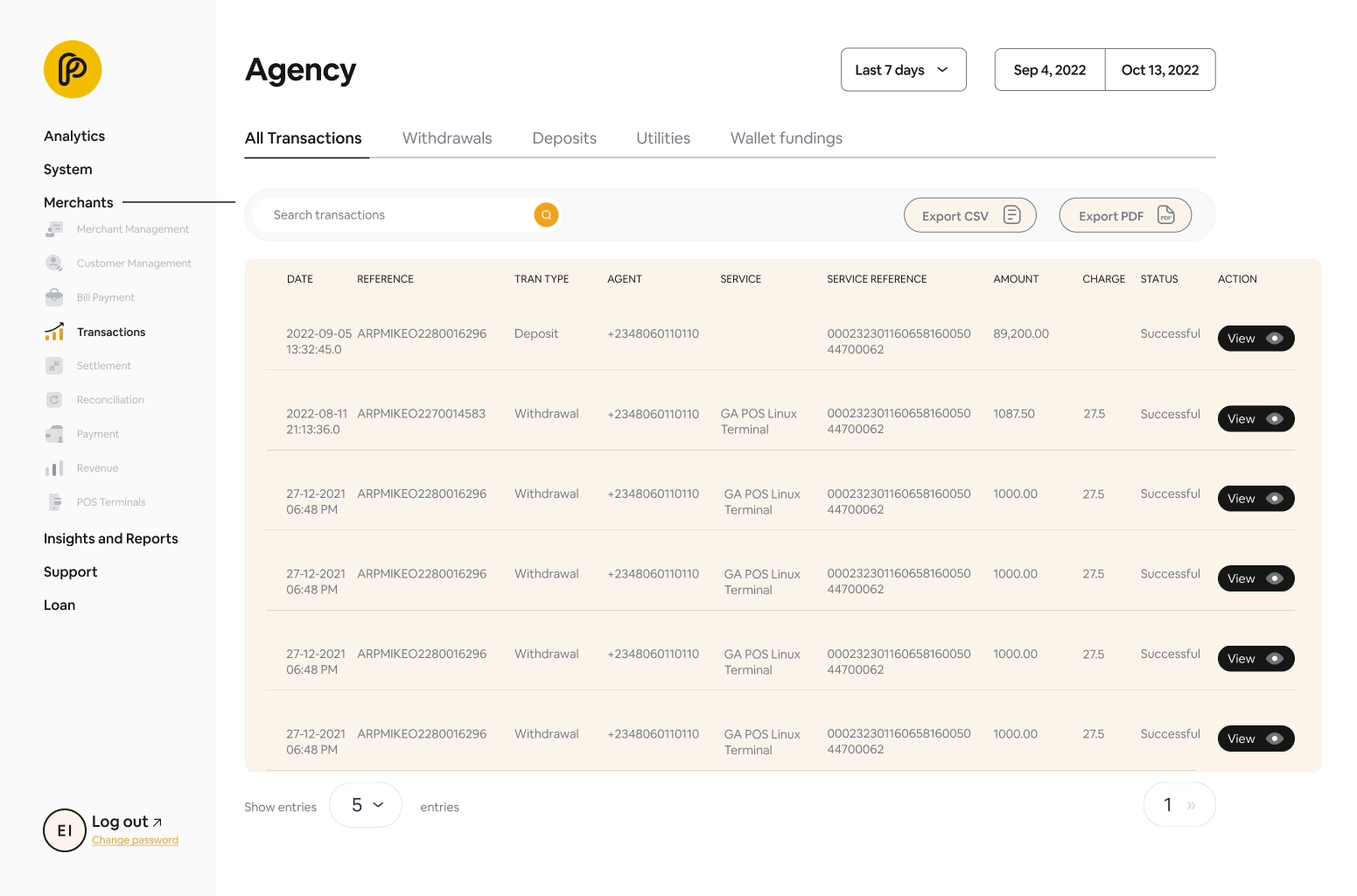
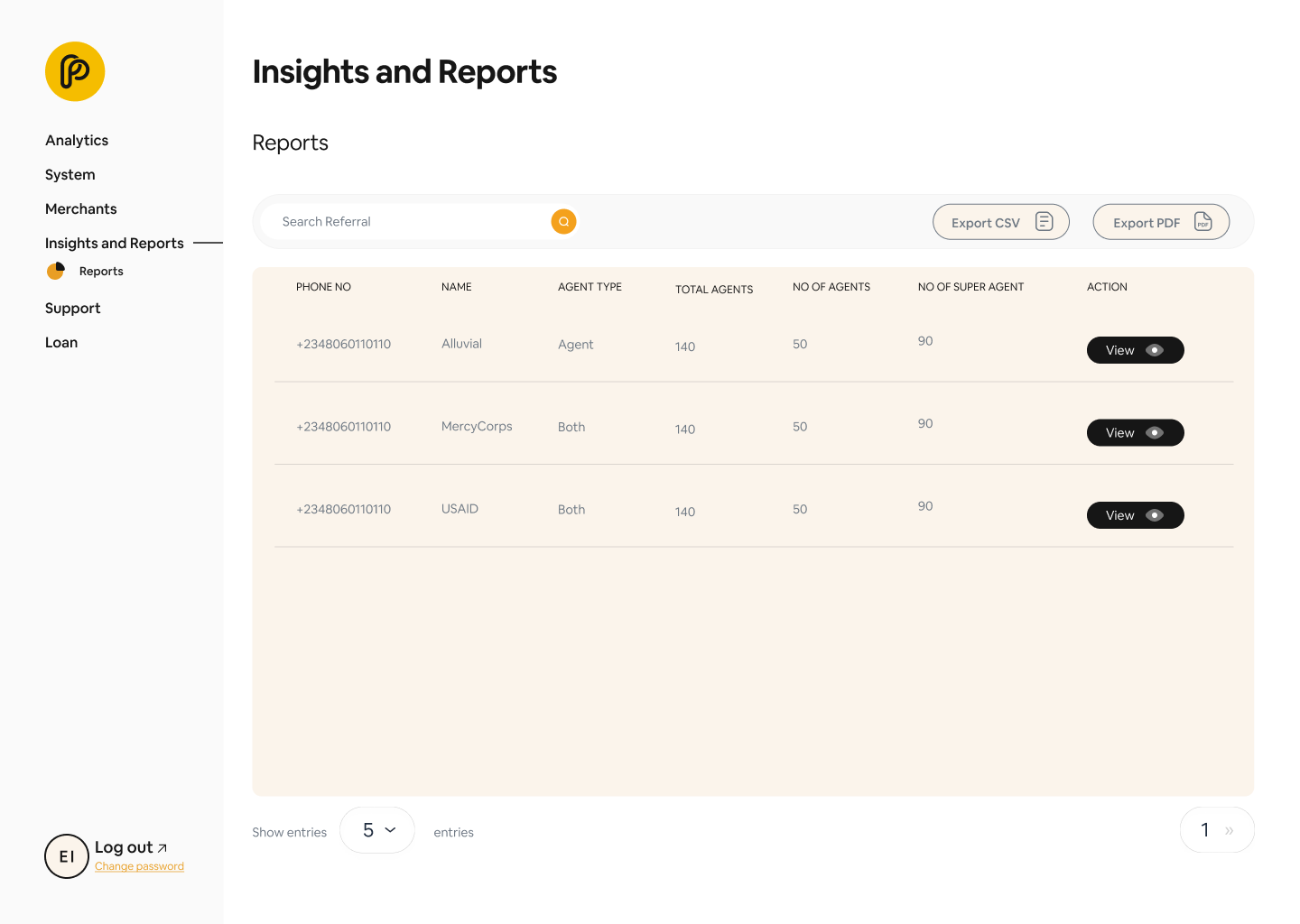
Two surfaces: a system-wide view for platform operators and a per-agent drill-down for agency supervisors. Separate filter sets, separate action controls, same underlying data.
Click to expand
Per-agent transaction log with type filtering, channel indicators, and status chips.
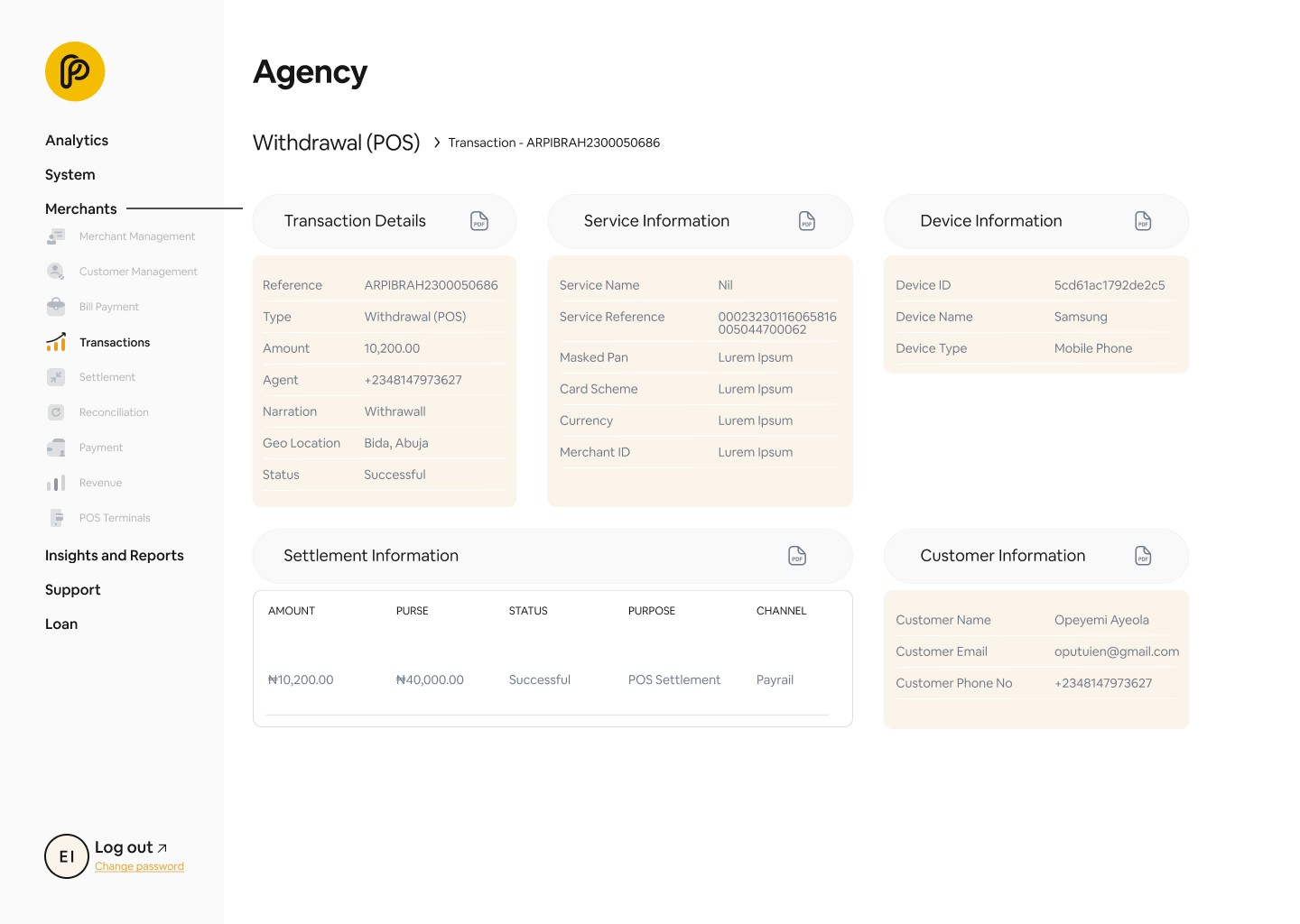 Click to expand
Individual transaction record with full metadata, party details, and admin controls.
 Click to expand
Platform-wide ledger with date range filters, channel type, and settlement status.
The platform controls
that run everything.
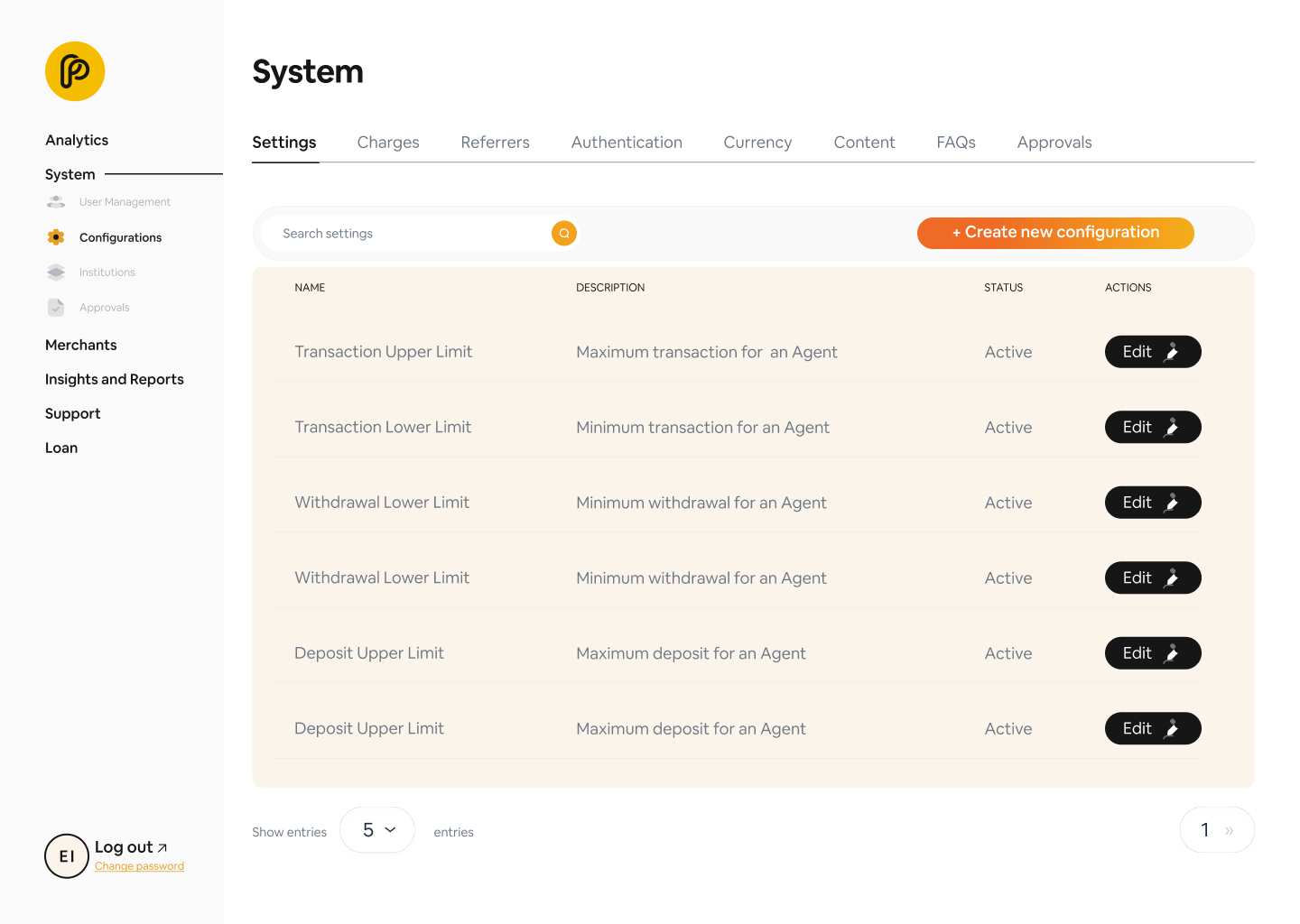
Global platform controls: wallet parameters, charge structures, commission rates, and currency rules. Changes cascade network-wide, so every action is intentional by design.
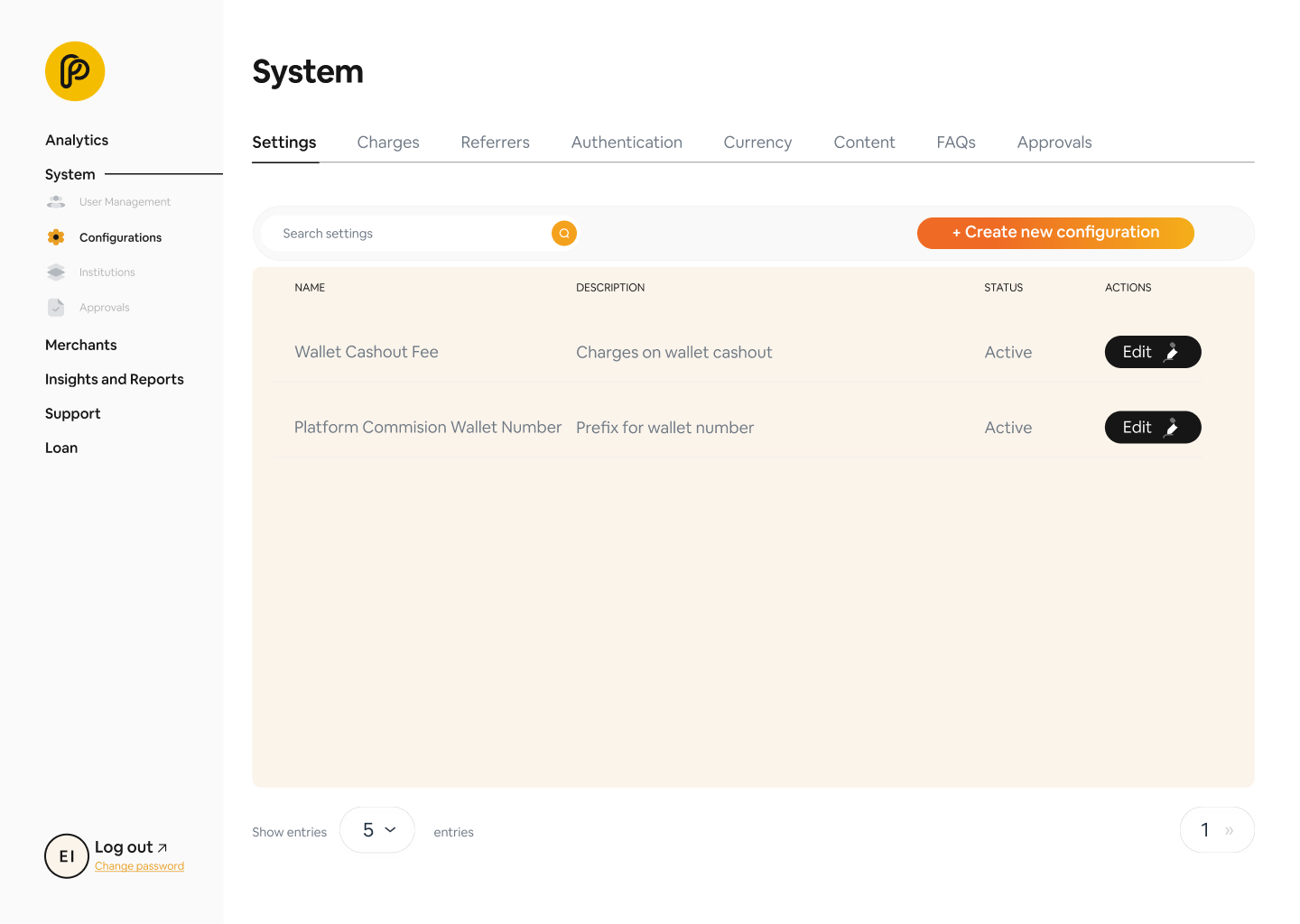 Click to expand
Platform-level wallet configuration with float limits and auto-funding thresholds.
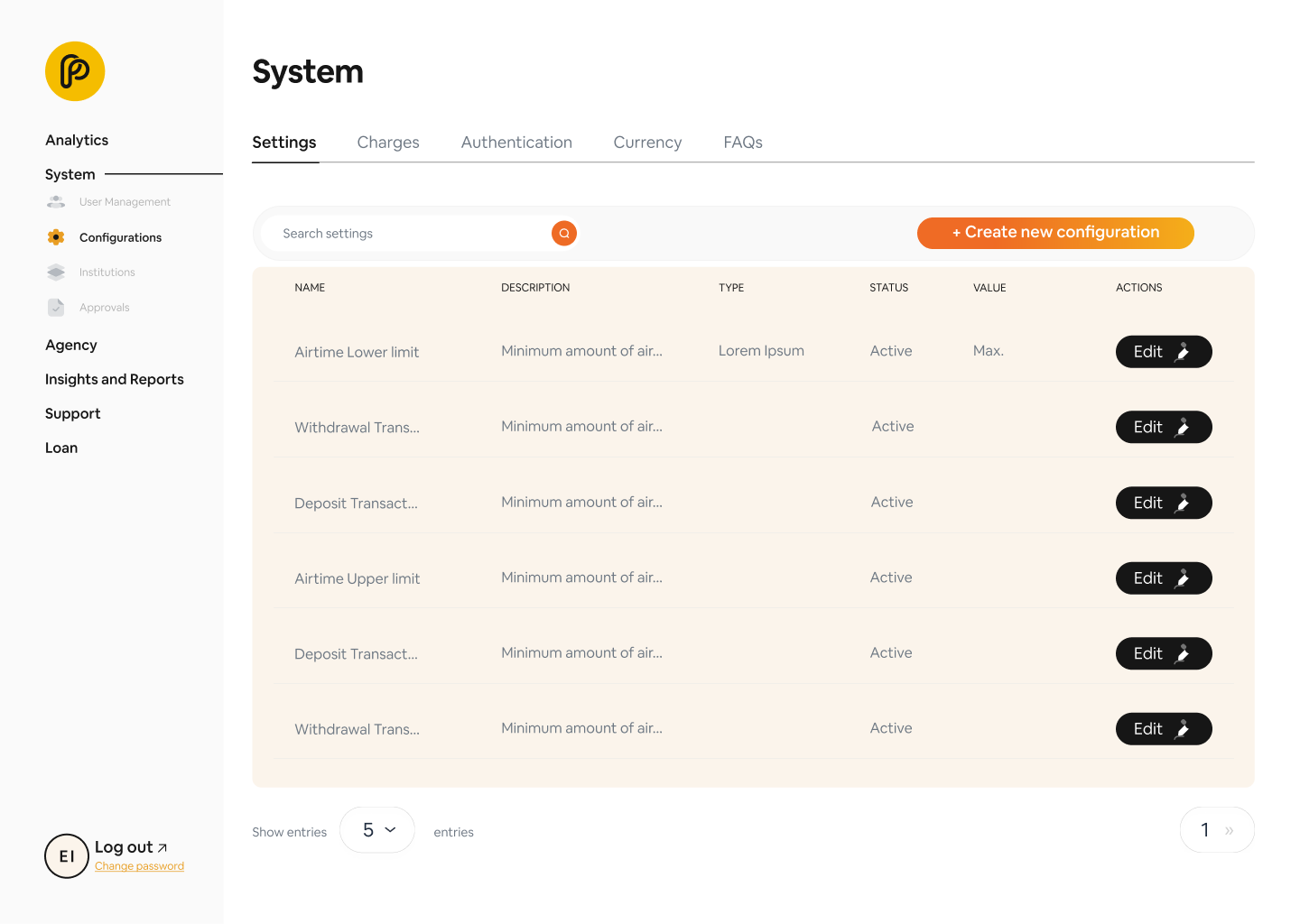 Click to expand
Global platform settings with service toggles, integration keys, and feature controls.
Insights, credit, and
resolution, all covered.
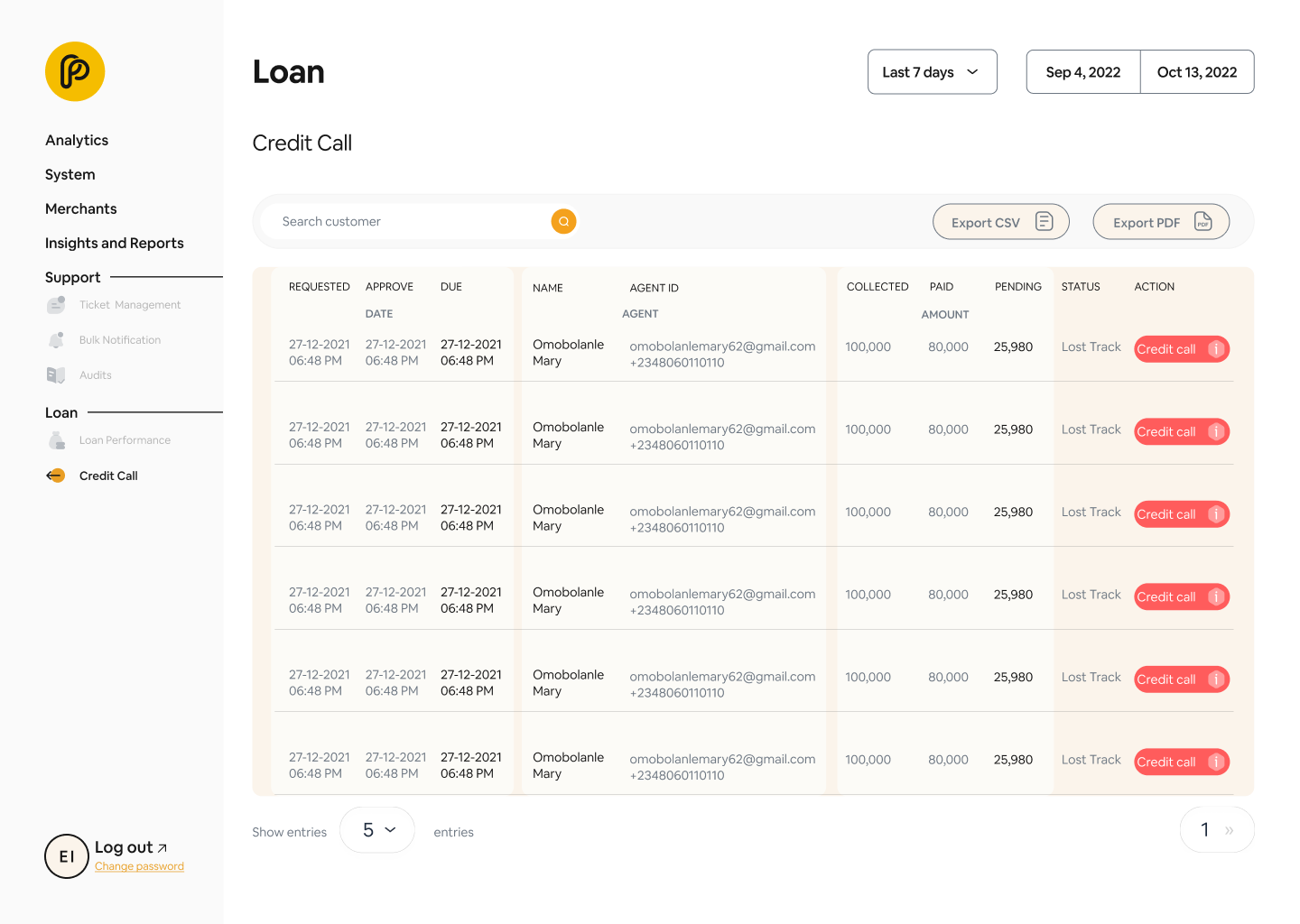
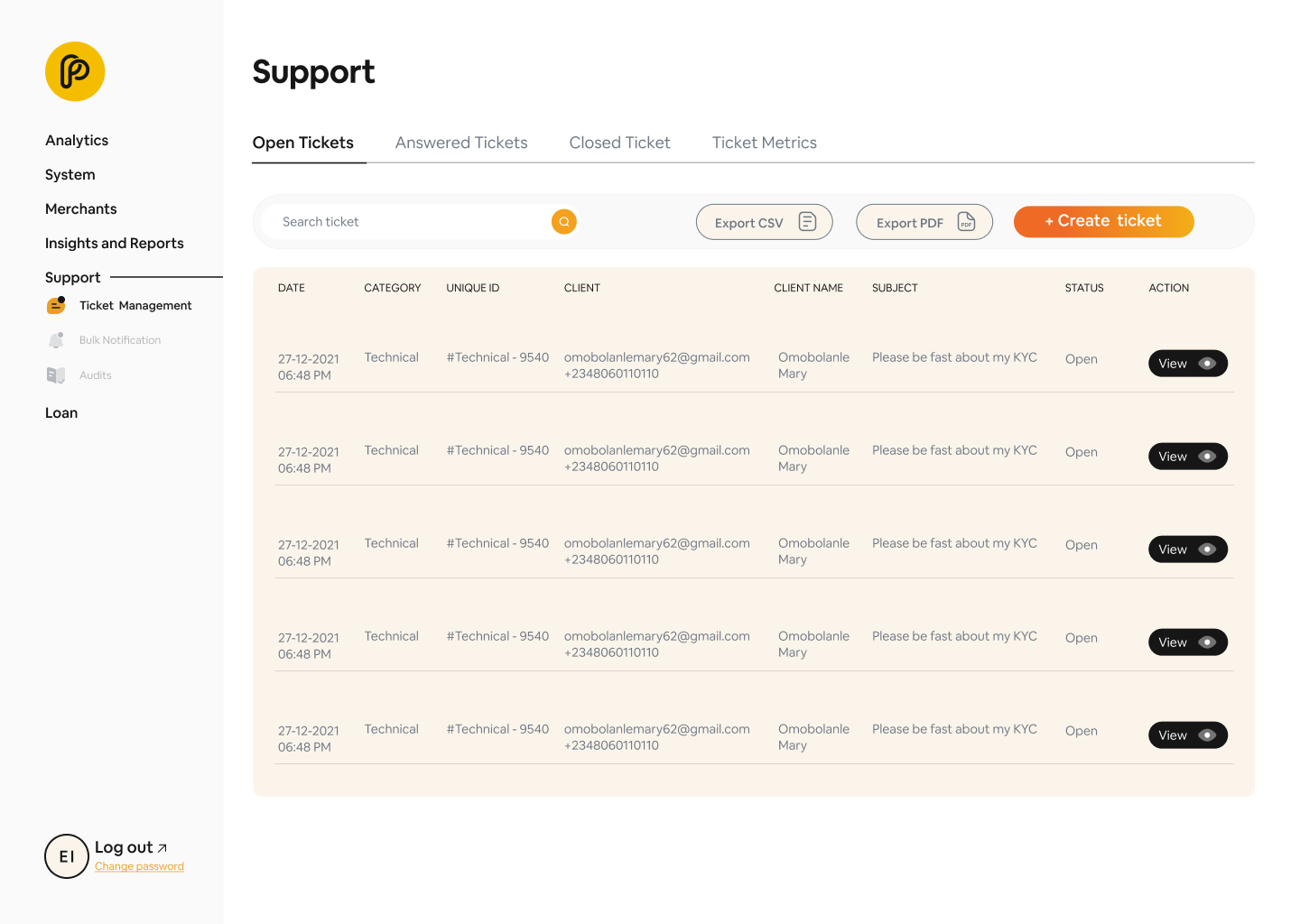
Business intelligence, loan portfolio management with a credit call review flow, and structured agent dispute resolution, all from the same admin surface.
Click to expand
Commission breakdowns, referral analytics, and agent performance metrics.
Click to expand
Portfolio health with disbursements, repayment tracking, and NPL ratios.
 Click to expand
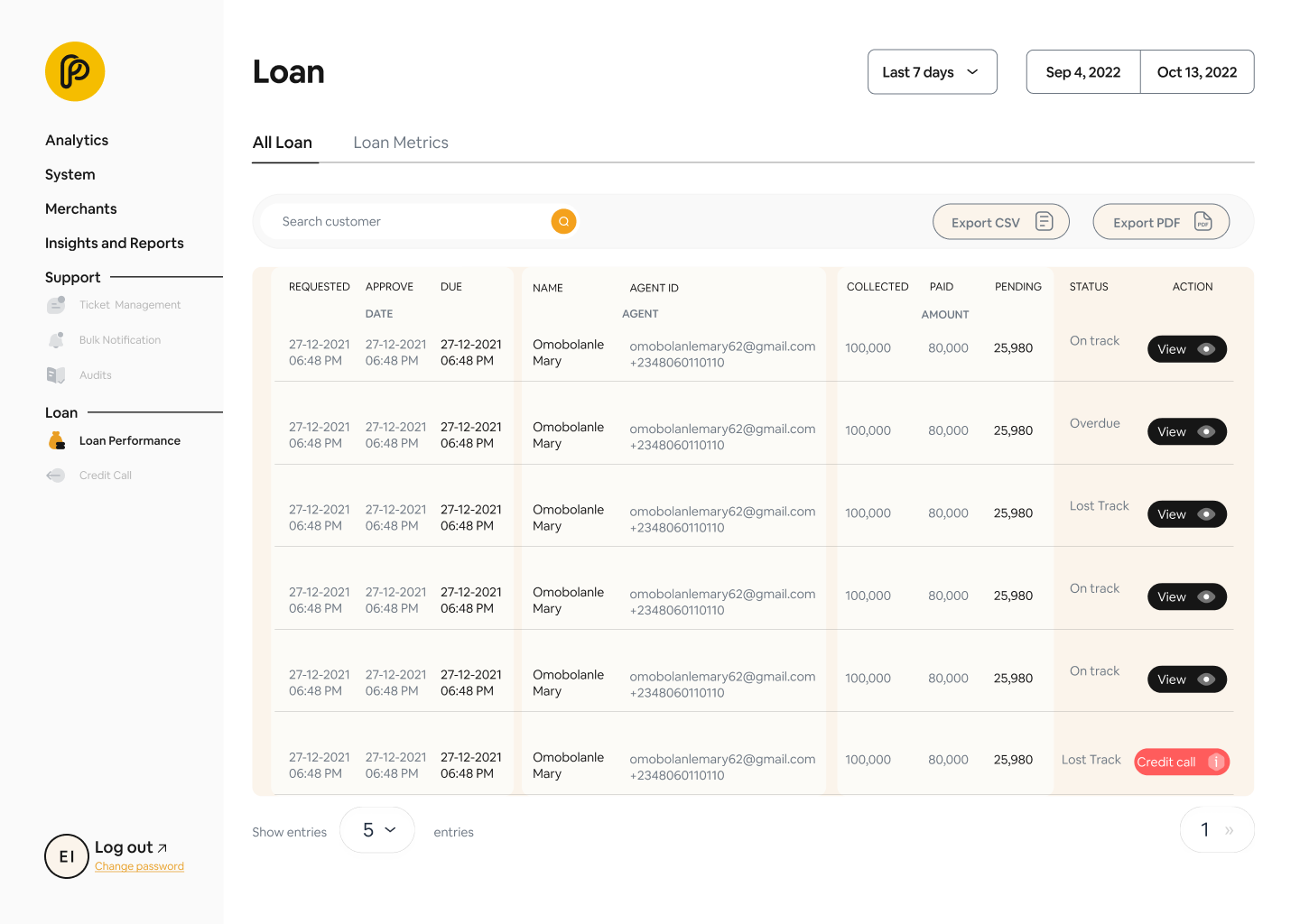
Loan application review with eligibility scoring and approval workflow.
 Click to expand
Full ticket detail with conversation thread, priority flags, and resolution controls.
Five principles behind
a 257-screen system.
Designing a high-stakes financial operations platform demands clear principles around density, safety, and navigation, especially when one wrong action can freeze a real person's income.
01
Module-first navigation across 6 operational domains
With six distinct domains, the sidebar needed to communicate module boundaries clearly. Operators should never lose orientation ten levels deep inside an agent's account. Module groupings were locked early to prevent drift across 257+ screens.
02
KYC as a dedicated compliance workflow, not an embedded view
KYC approval is irreversible. Rather than embedding it in the agent list, it got a dedicated pending queue with document preview and two-step confirmation, reducing accidental approvals on high-risk submissions.
03
POS terminal lifecycle as an explicit state machine
Terminals move through fixed states, each requiring different actions. An explicit state machine with clear status labels and per-state action locking made terminal management feel controlled, not chaotic.
04
Dual transaction surfaces for different audiences
Platform operators need everything; agency supervisors need one agent. Rather than one filtered table, two distinct surfaces: System-wide and Agency-level, each with its own filter set and operator context.
05
Data-dense tables designed for scanning, not reading
Hundreds of rows reviewed daily. Every table built scan-first: fixed-width numeric columns, colour-coded status chips, sticky headers, and row-level actions without leaving the list. Density is a feature.
Fintech UX means
designing for risk.
These safeguards were built into the design from the start, not added as afterthoughts. They are what separate a production-ready fintech dashboard from a generic admin template.
Status-Driven Actions
Available actions change by entity state. An active POS cannot be re-assigned; an approved KYC hides decline. Invalid paths are invisible, not disabled.
Destructive Action Gates
KYC decline, agent deactivation, and terminal decommission all require two-step confirmation. No high-consequence action completes on a single click.
Permission-Scoped Controls
Settlement, system config, and loan approvals are scoped to admin roles. Sensitive controls are invisible to operators who shouldn't have access.
Full Audit Visibility
Every admin action — KYC decision, terminal state change, account action — is logged with actor identity and timestamp. Any state can be traced back to who changed it.
POS State Integrity
Terminals cannot skip lifecycle states. Must be assigned before active; retrieved before decommissioning. Prevents orphaned or double-assigned hardware.
What you see is what
can be shared.
Non-disclosure agreement in effect. Payrail is an active commercial fintech product. The screens shown are a curated selection from a 257+ screen engagement. Proprietary charge configurations, agent data models, compliance tooling, and unreleased features are covered under NDA and not shown.
What 257 screens taught
me about complexity.
Scale demands a system, not just screens. At 250+ screens, consistent components, page templates, and naming conventions are what keep the design coherent. The investment in a shared system pays back on every screen that follows.
In fintech, clarity is a compliance feature. When one wrong click can deactivate a real person's livelihood or approve fraudulent KYC, every destructive action needs a confirmation step. Reducing cognitive load on a financial platform is risk mitigation.
Operators think in tasks, not screens. Designing settlement list to payout to confirmation as a continuous task, not separate screens, made the platform feel intentional rather than cobbled together.
Data density is a feature, not a problem to solve away. Operators at scale need density: multi-column tables, deep filters, multi-series charts. Embracing that density and making it navigable was the right call.
Interested in how I approach product work?
Book a 20-min intro call, or send the role details by email.