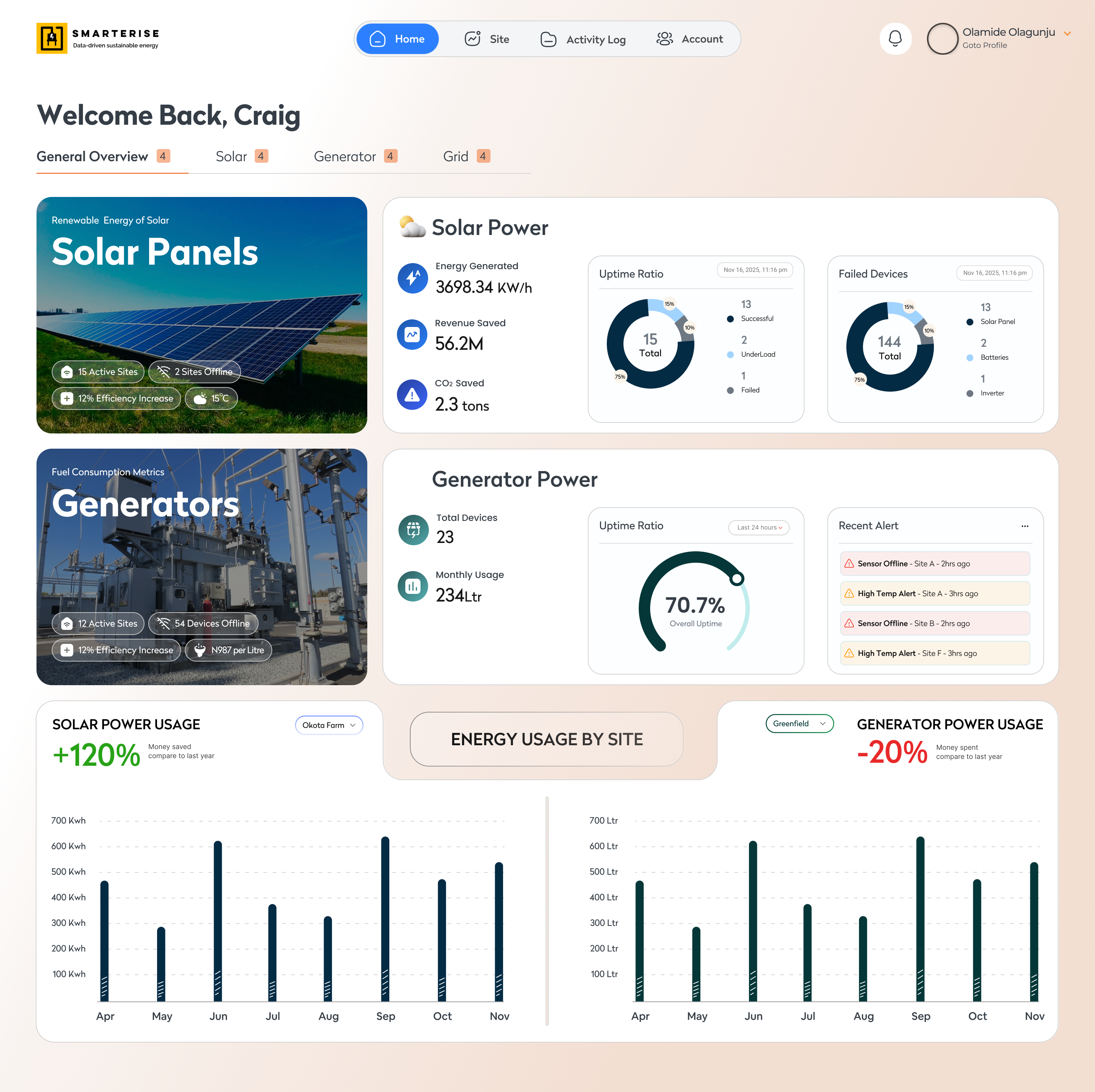
Replacing WhatsApp
with a Logistics Platform.
Shipped Twice.
Japtini Logistics ran entirely on phone calls and WhatsApp voice notes. We designed the digital alternative: a three-sided platform for clients, truck owners, and operations teams. Then we iterated from V1 to V2 based on what real users showed us.
A logistics company running on voice notes needed a real product.
Three platforms. 22 showcased screens from a 400+ screen logistics CRM system. One system that replaced every phone call and WhatsApp voice note in a running logistics business.
Japtini is a Nigerian logistics startup operating freight routes across Nigeria and Kenya. When I joined, every order was tracked by phone call, every dispute was handled by WhatsApp voice note, and every driver update was word-of-mouth. The operations team had no visibility. Clients had no tracking. Truck owners had no way to manage earnings or jobs digitally.
The brief was to design a multi-sided platform from scratch, simultaneously, for three user types with completely different needs. That meant building a customer booking web app, a partner mobile app for truck owners, and a role-based CRM for the internal operations team.
Three weeks of architecture
before a single frame.
Three platforms. Eight user roles. One backend. The only way to avoid designing ourselves into a corner was to map the entire system, every flow, every decision point, every place where user types intersected, before opening Figma. Then we built the component library. Then we designed.
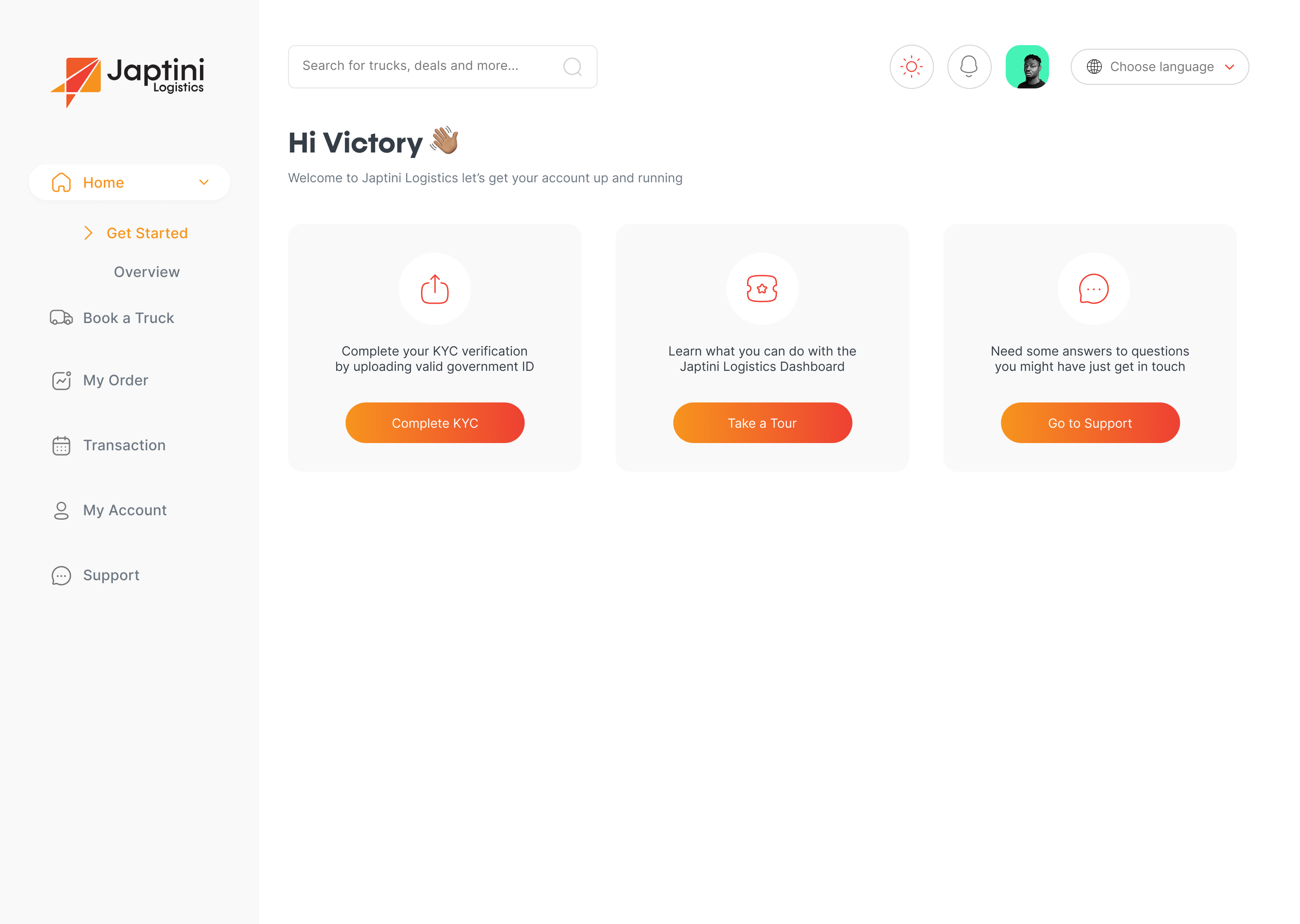
Customer Web App
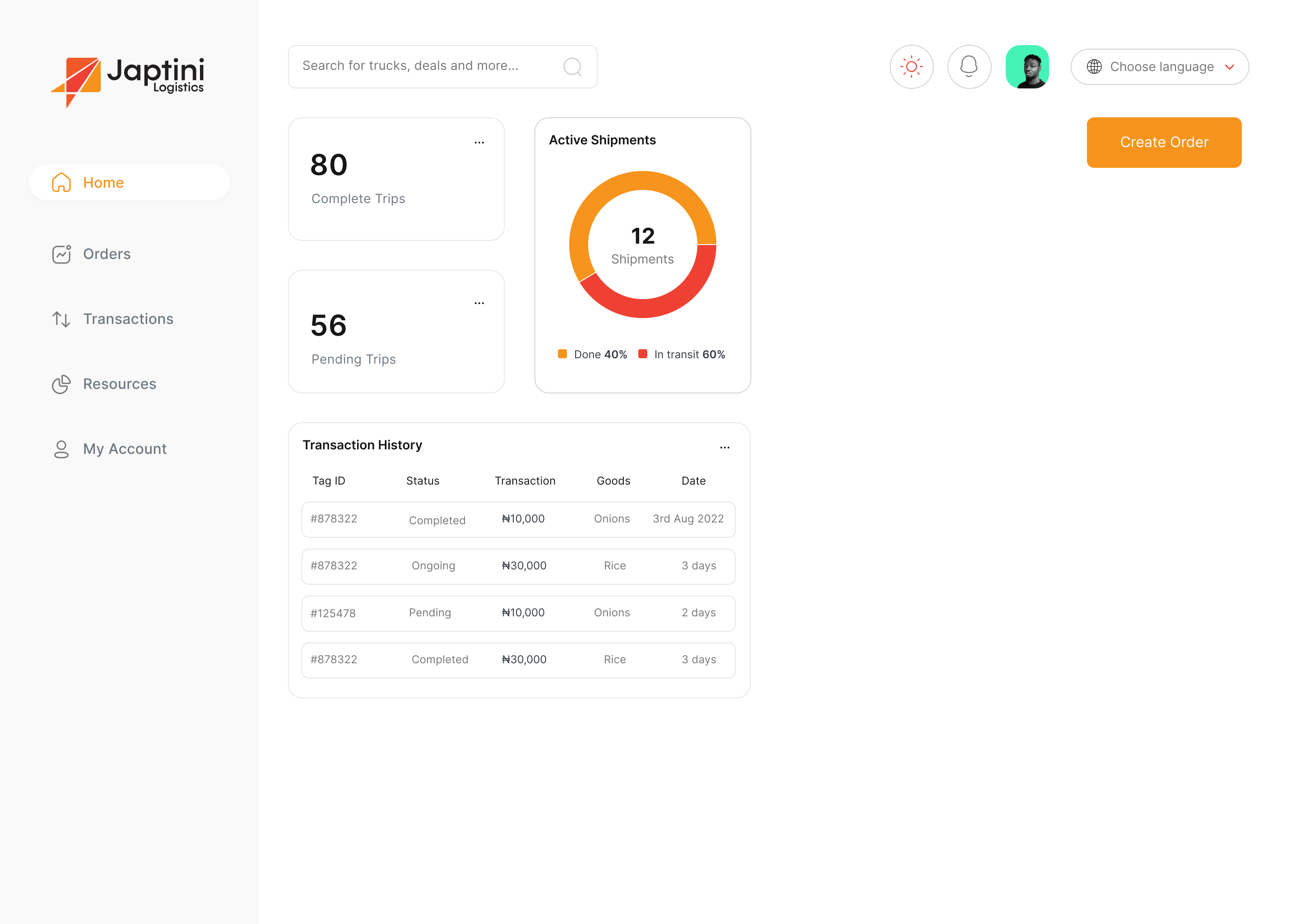
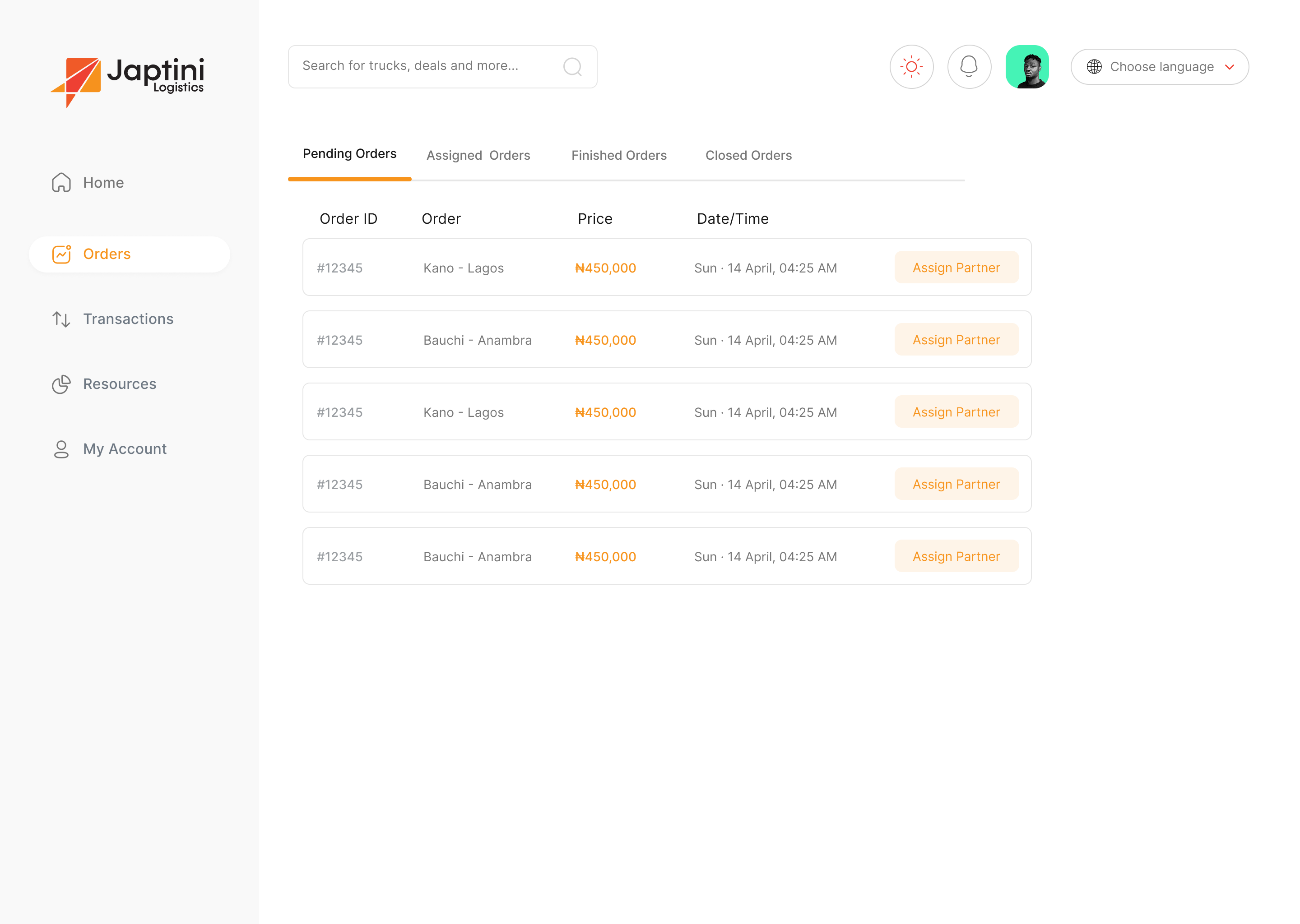
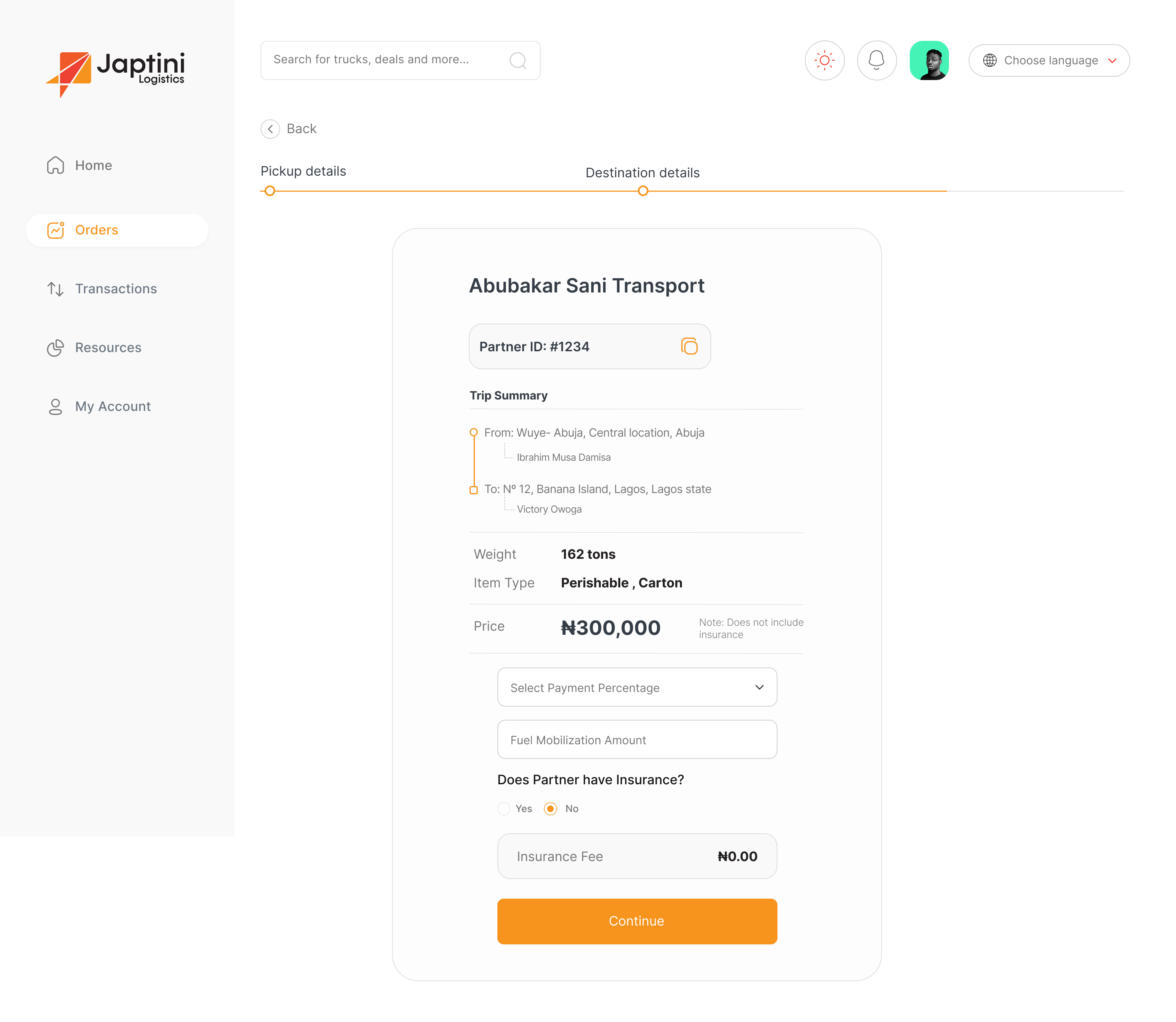
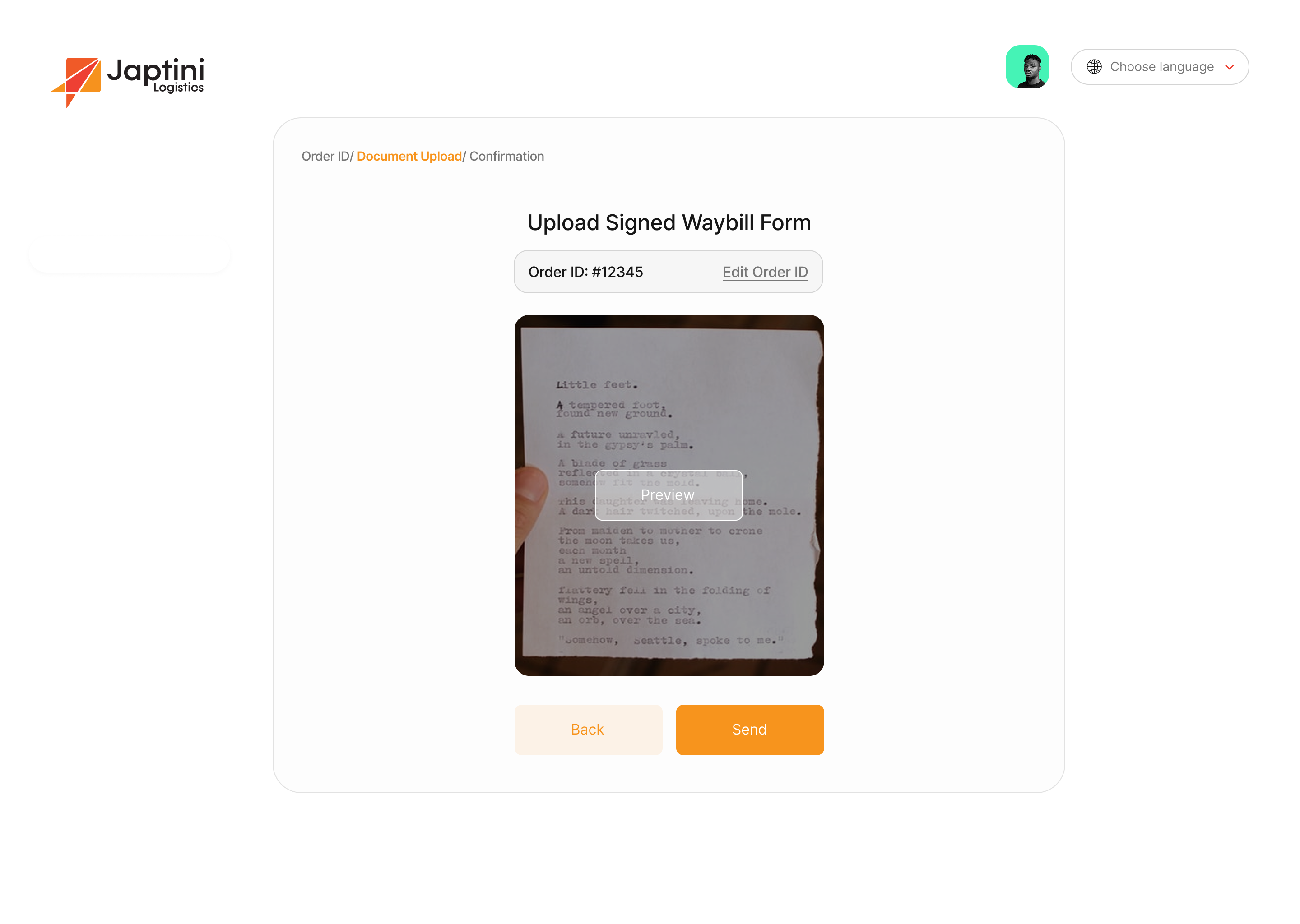
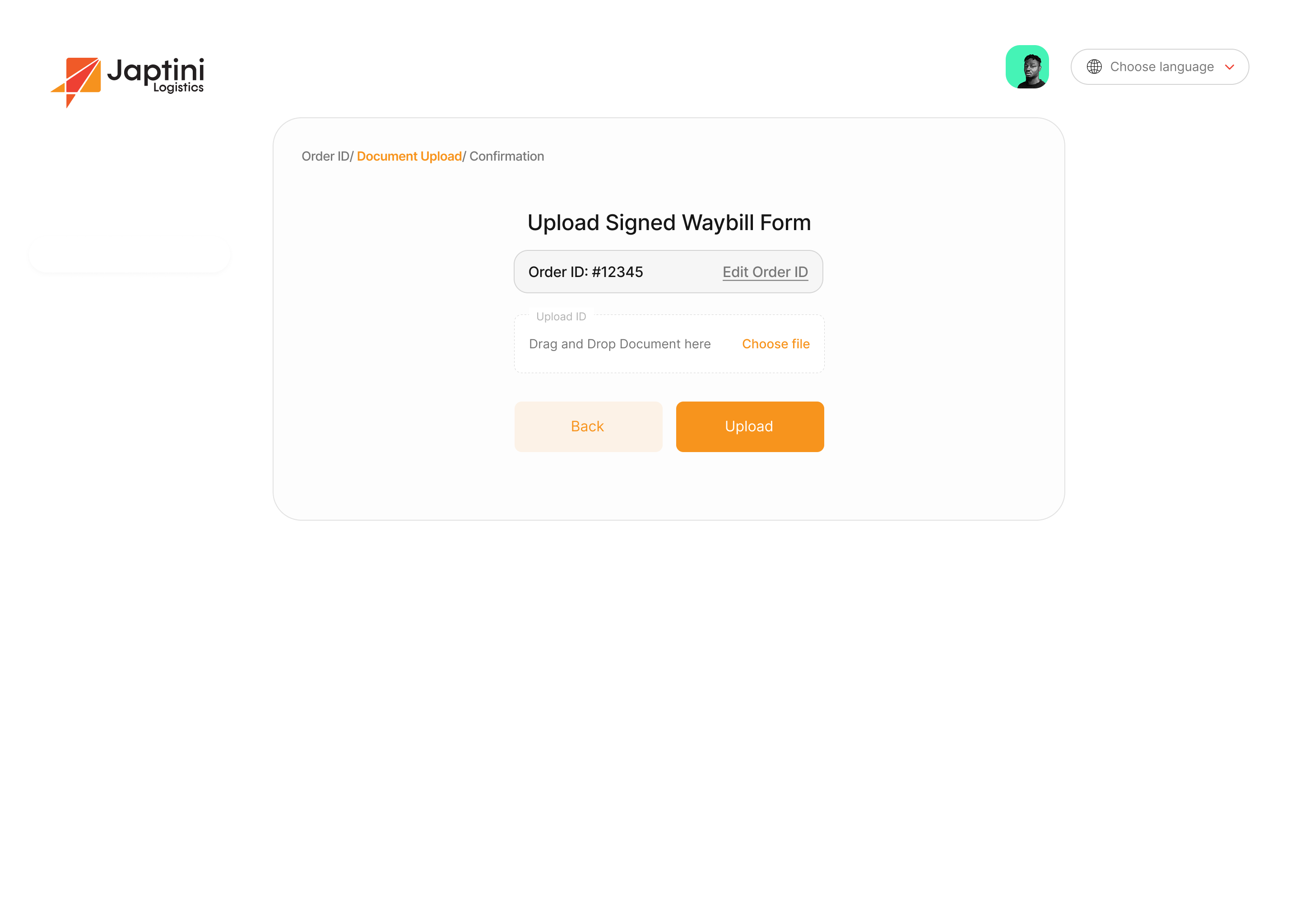
Corporate clients book shipments, track cargo in real time, and manage account history. Designed for trust and visibility, the two things WhatsApp couldn't provide.
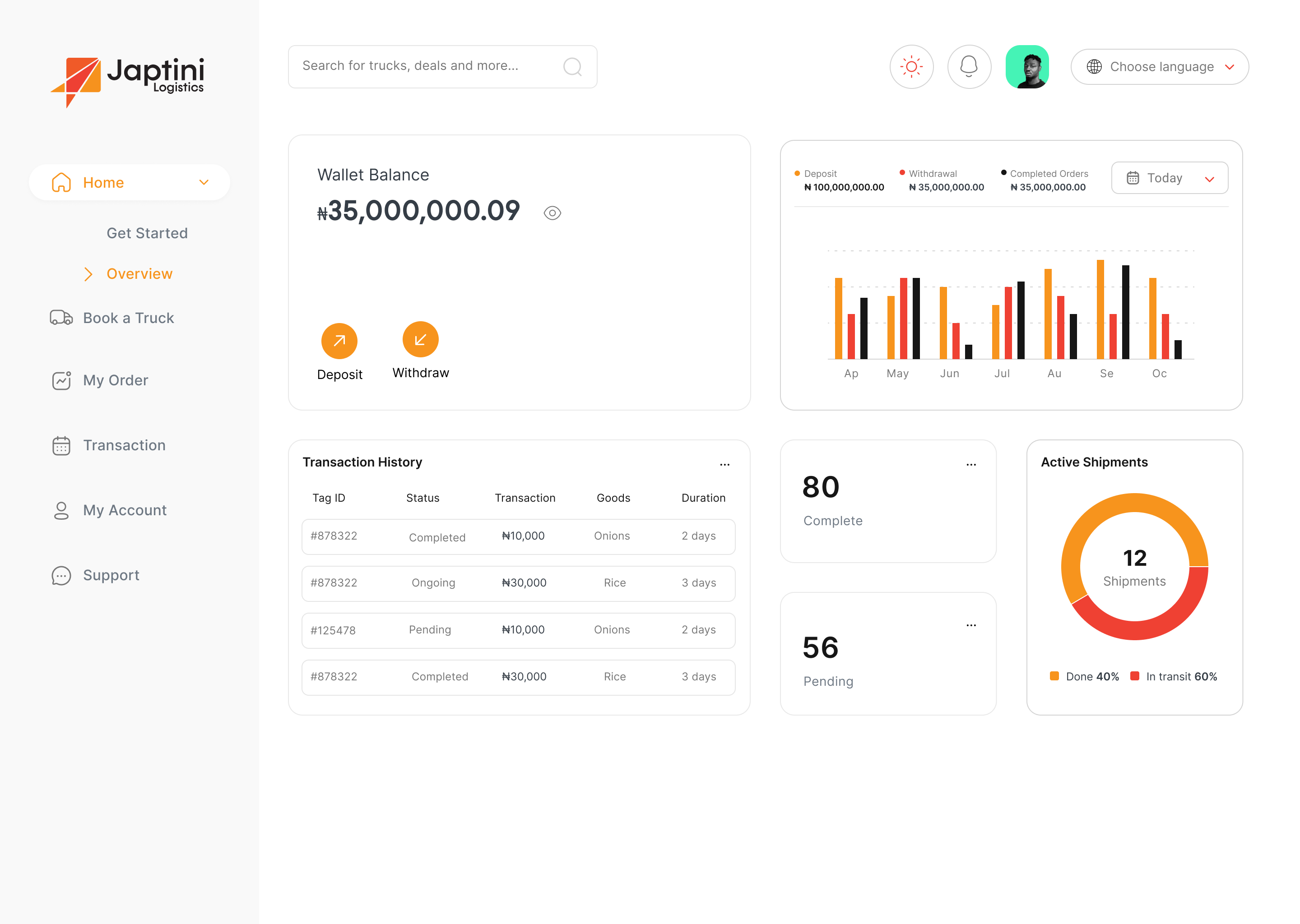
Partner Mobile App
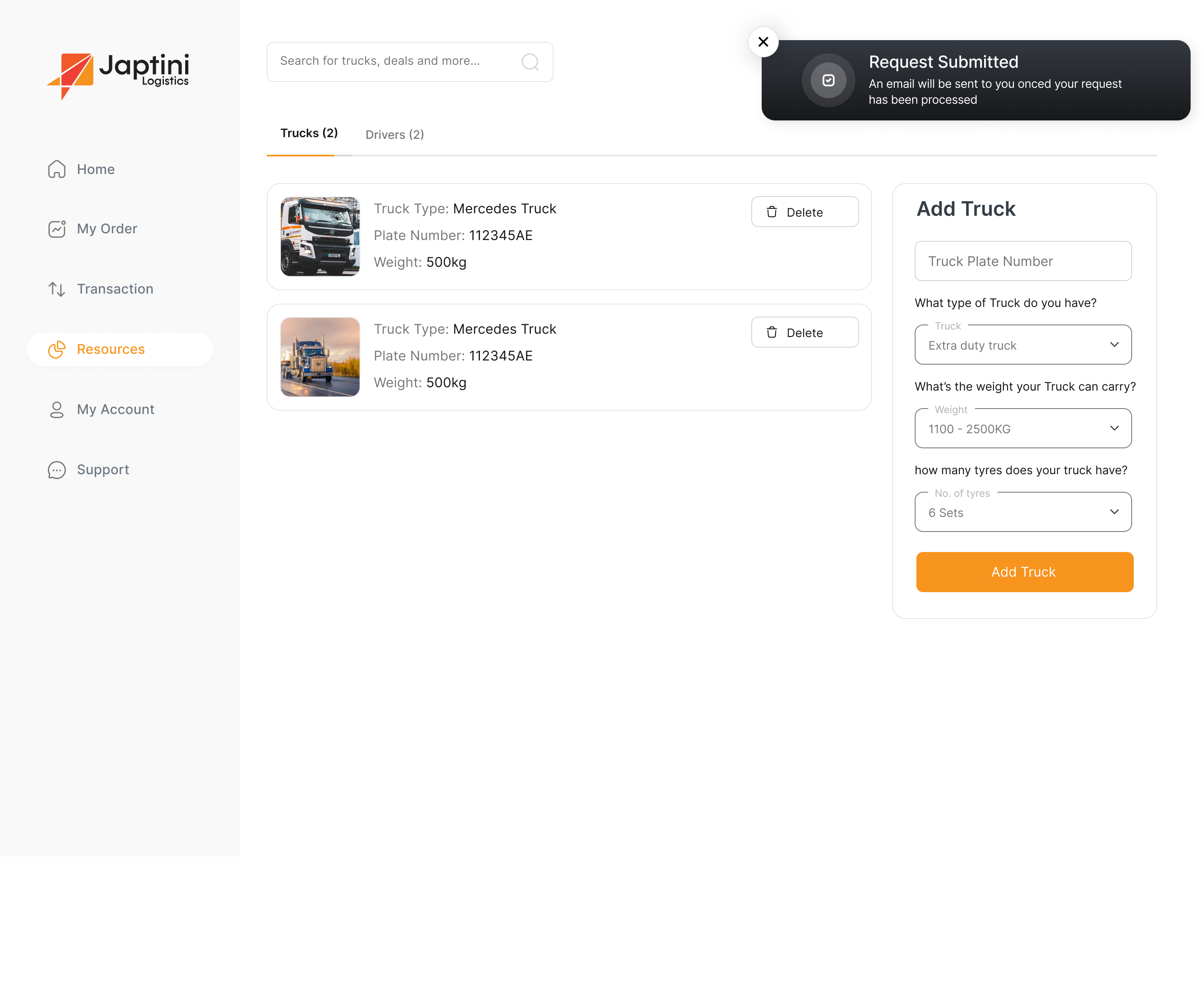
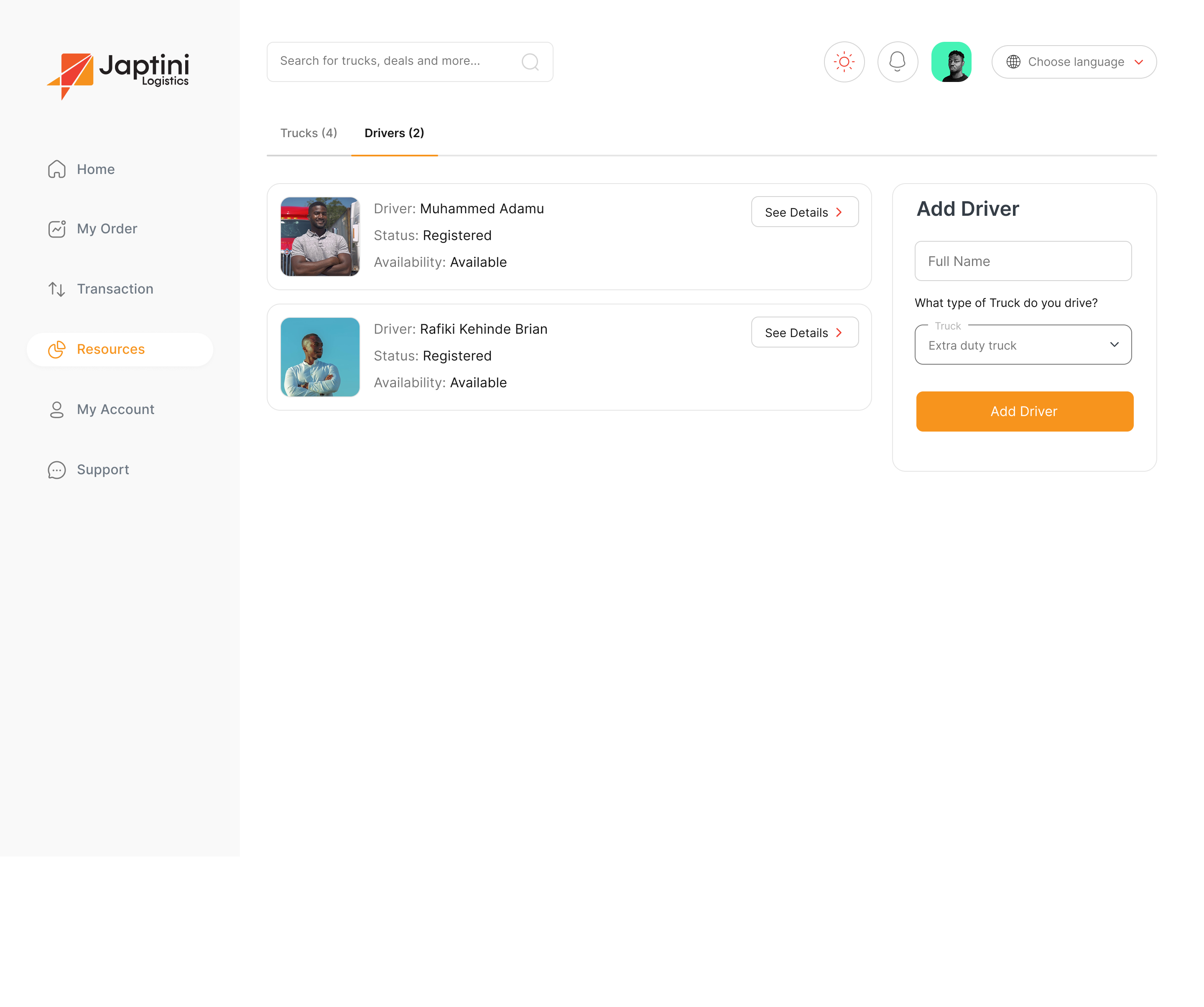
Truck owners accept jobs, track earnings, manage their fleet, and withdraw funds. Designed for one-handed use in low-connectivity environments. That's where they work.
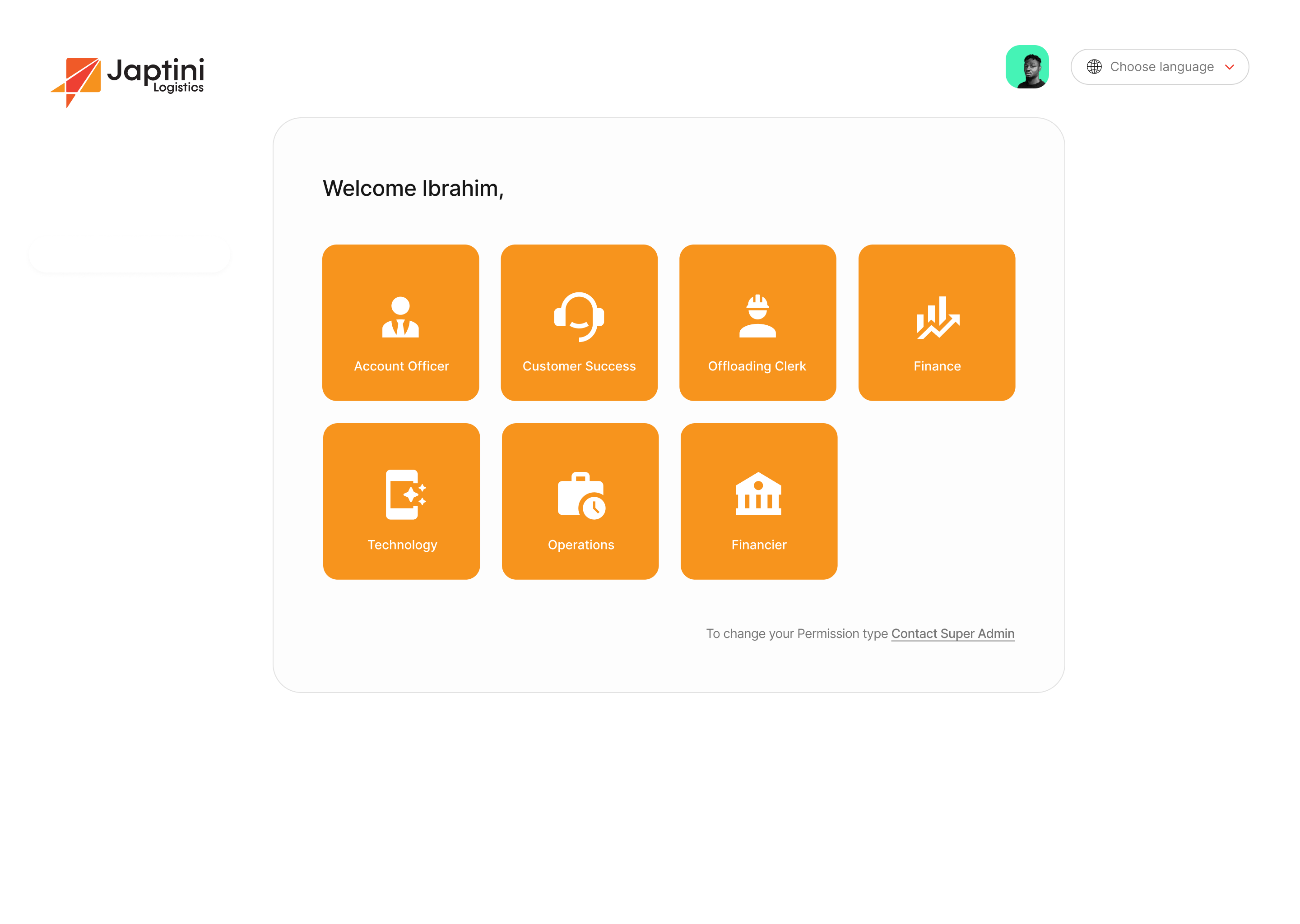
Operations CRM
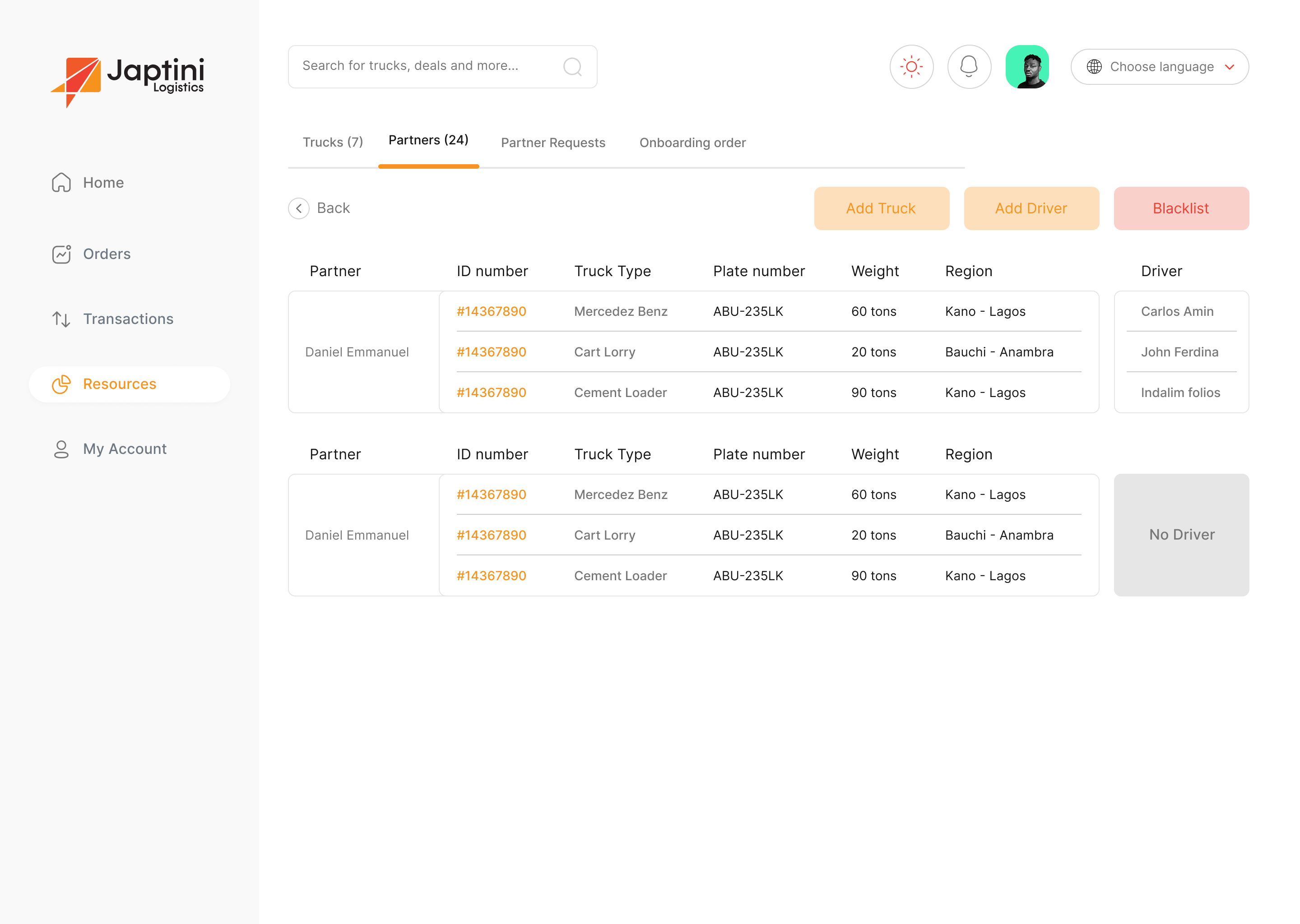
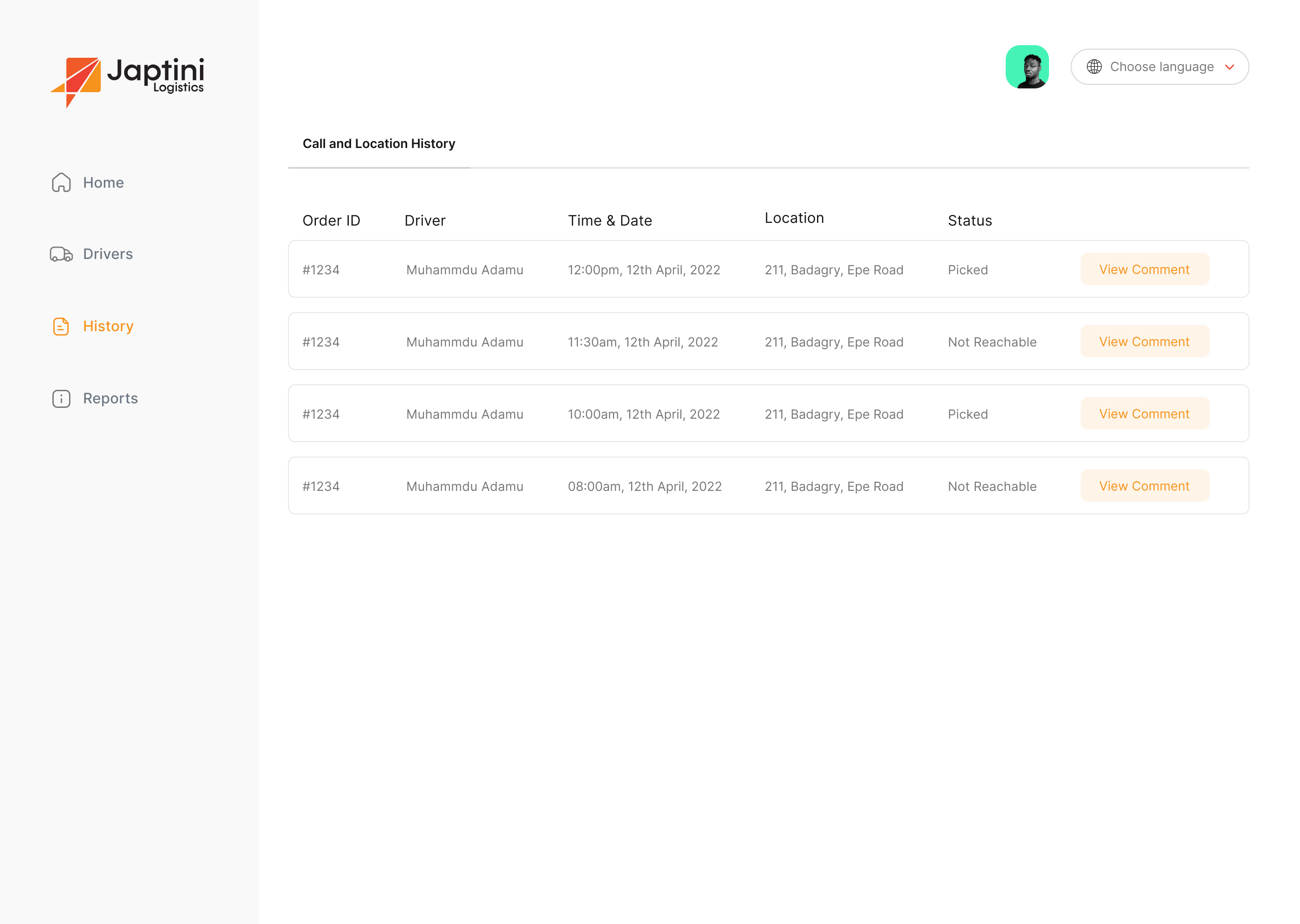
Six departments. Eight user roles. One system. The CRM gave each department exactly what they needed through a role-based access control system designed from scratch.
One platform.
Four mental models.
Every screen had to serve one of four users, each with completely different goals, environments, and trust levels.
Cargo visibility on demand.
Corporate clients book shipments and need real-time cargo tracking without calling ops. They're web-first, trust-sensitive, and measure Japtini by reliability, not features.
Accept jobs. Track money. No friction.
Truck owners work in low-connectivity environments with one hand on the wheel. They needed instant job decisions, offline-tolerant screens, and a wallet they could trust.
Total visibility across every order.
Operations staff across six departments needed a shared CRM with role-based access, so the account officer, offloading clerk, and CS agent could each work without colliding.
Onboard partners. Own the relationship.
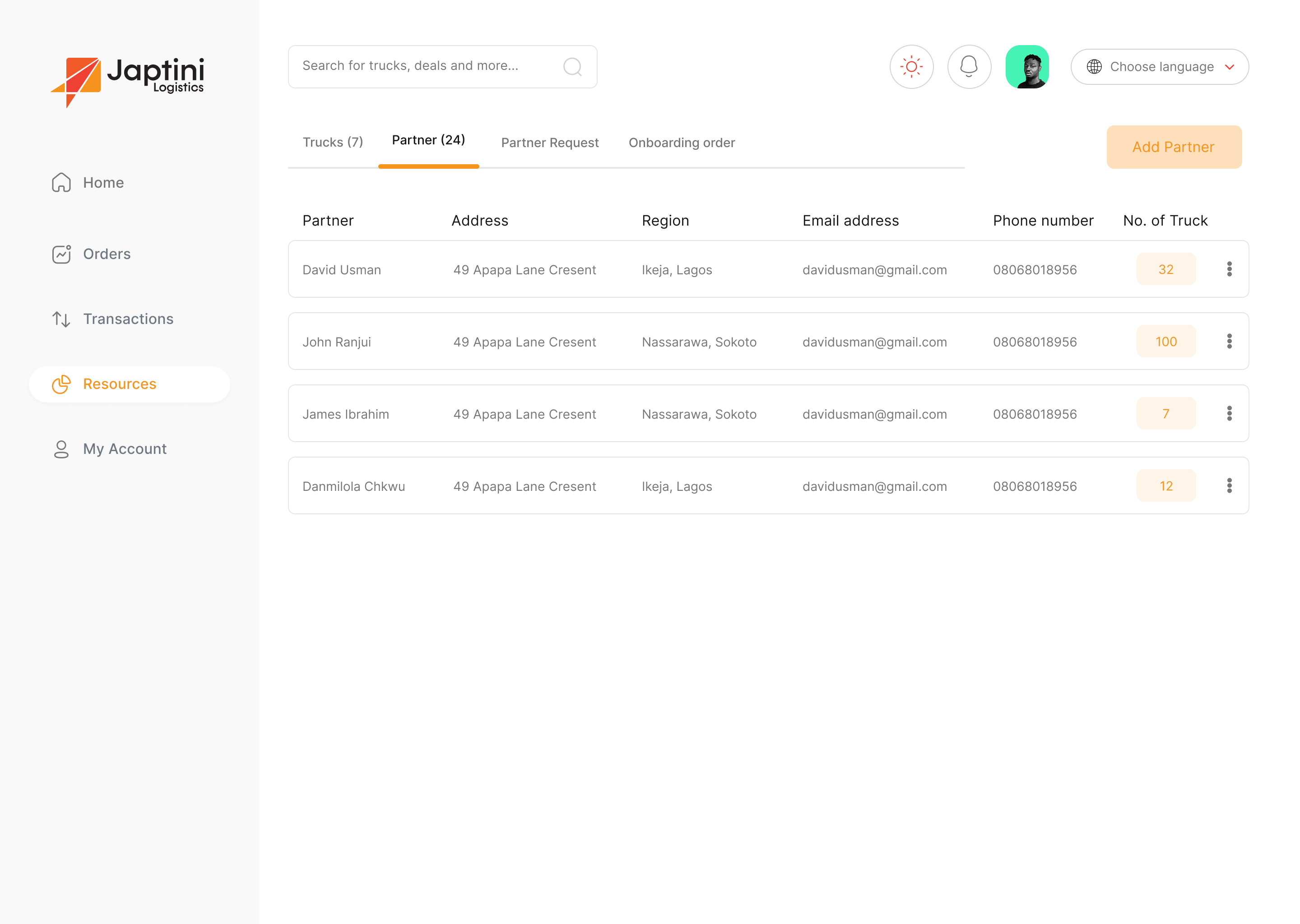
Account officers were the bridge between Japtini and its truck owner network. They needed tools to onboard partners, verify KYC, and monitor fleet performance in one view.
From sign-up to
shipment tracked.
Follow a corporate client through the complete Japtini experience.
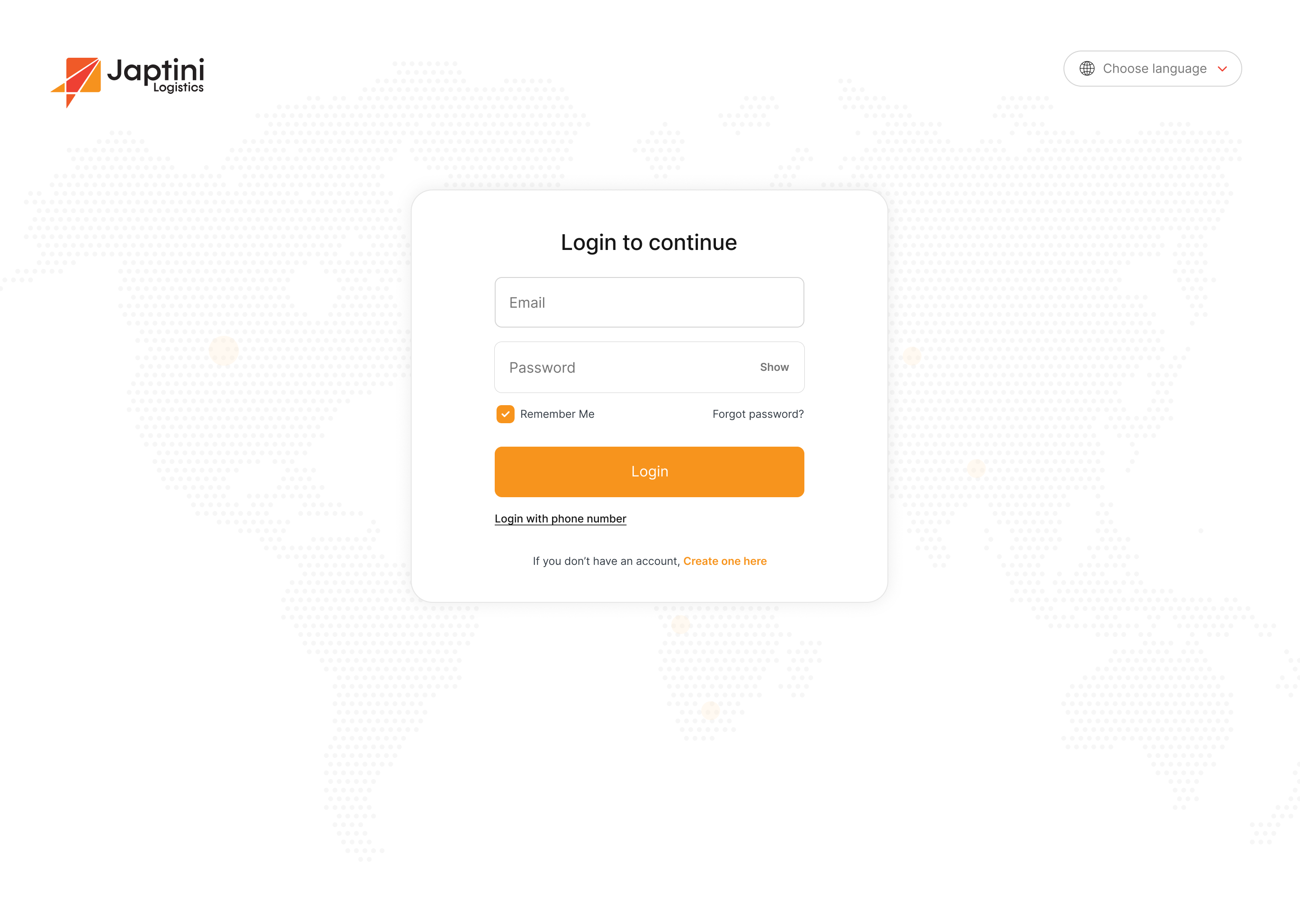
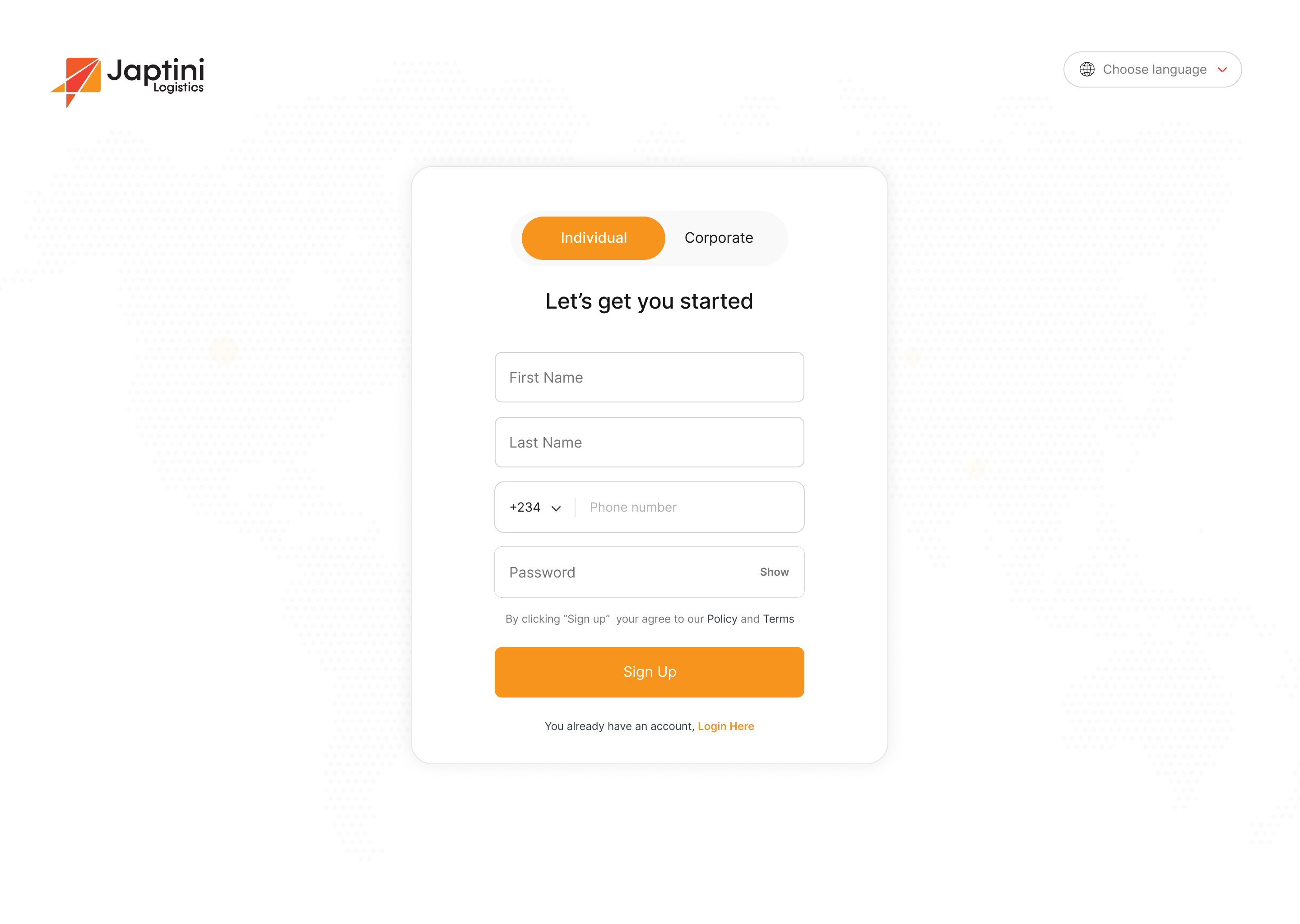
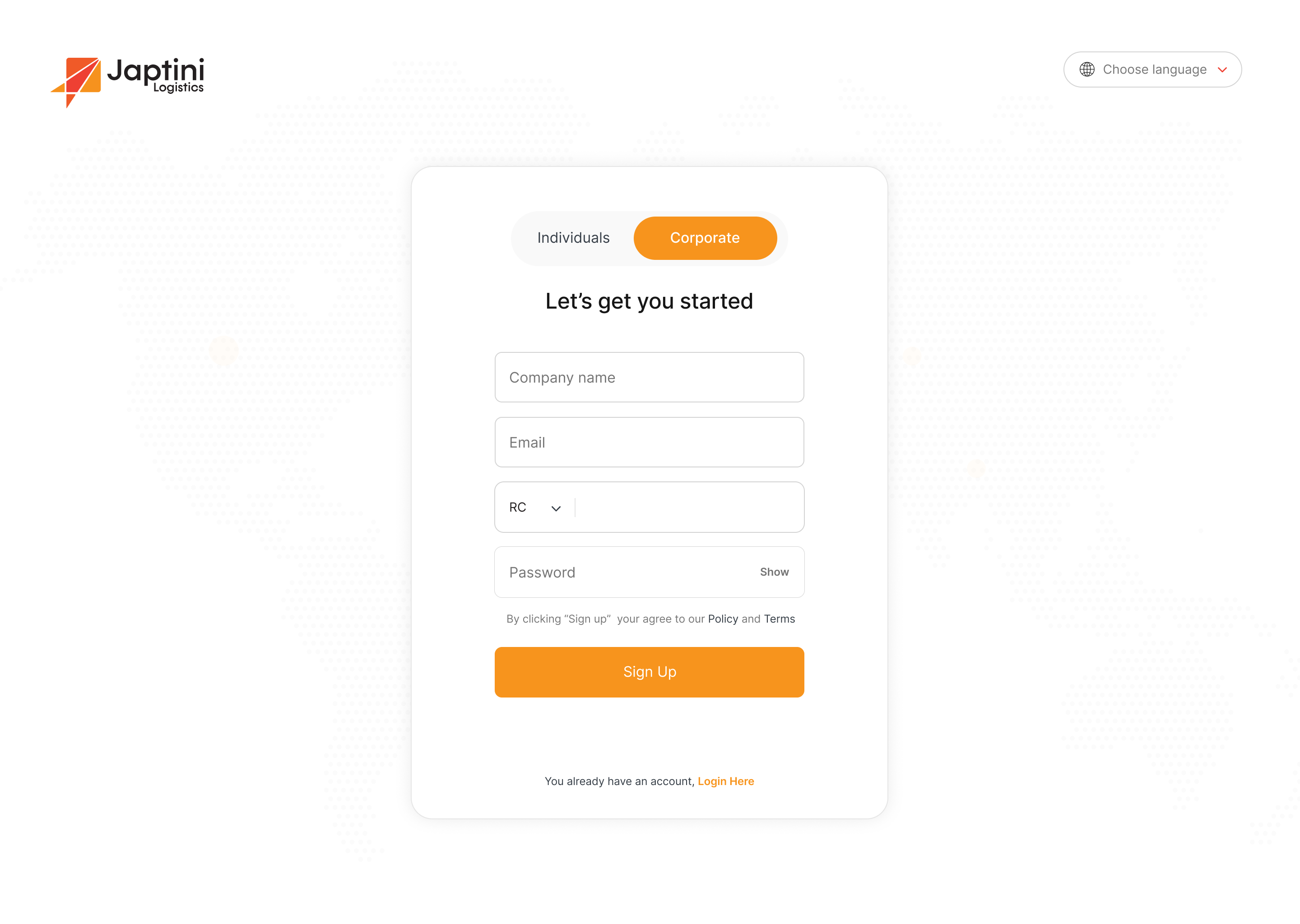
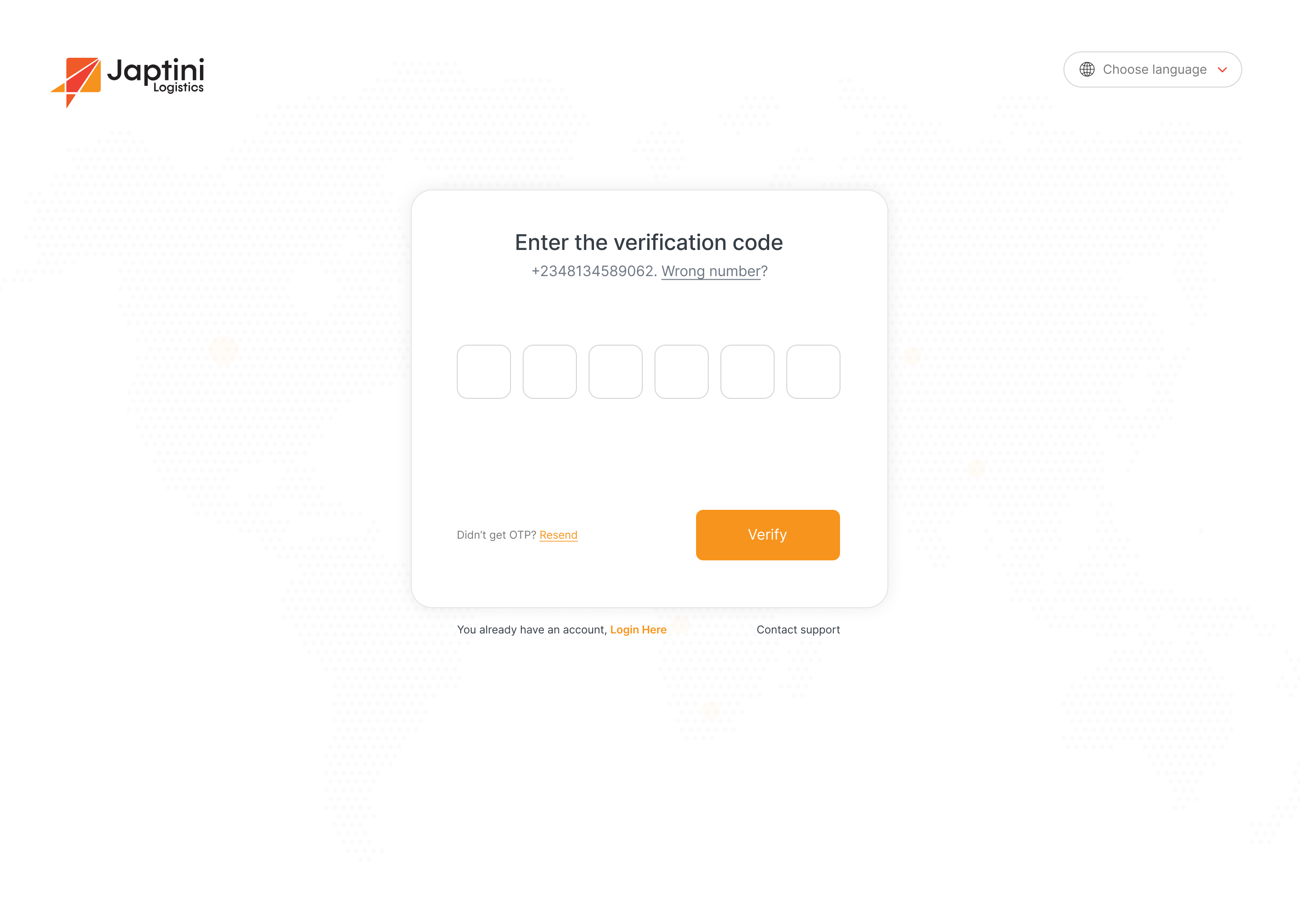
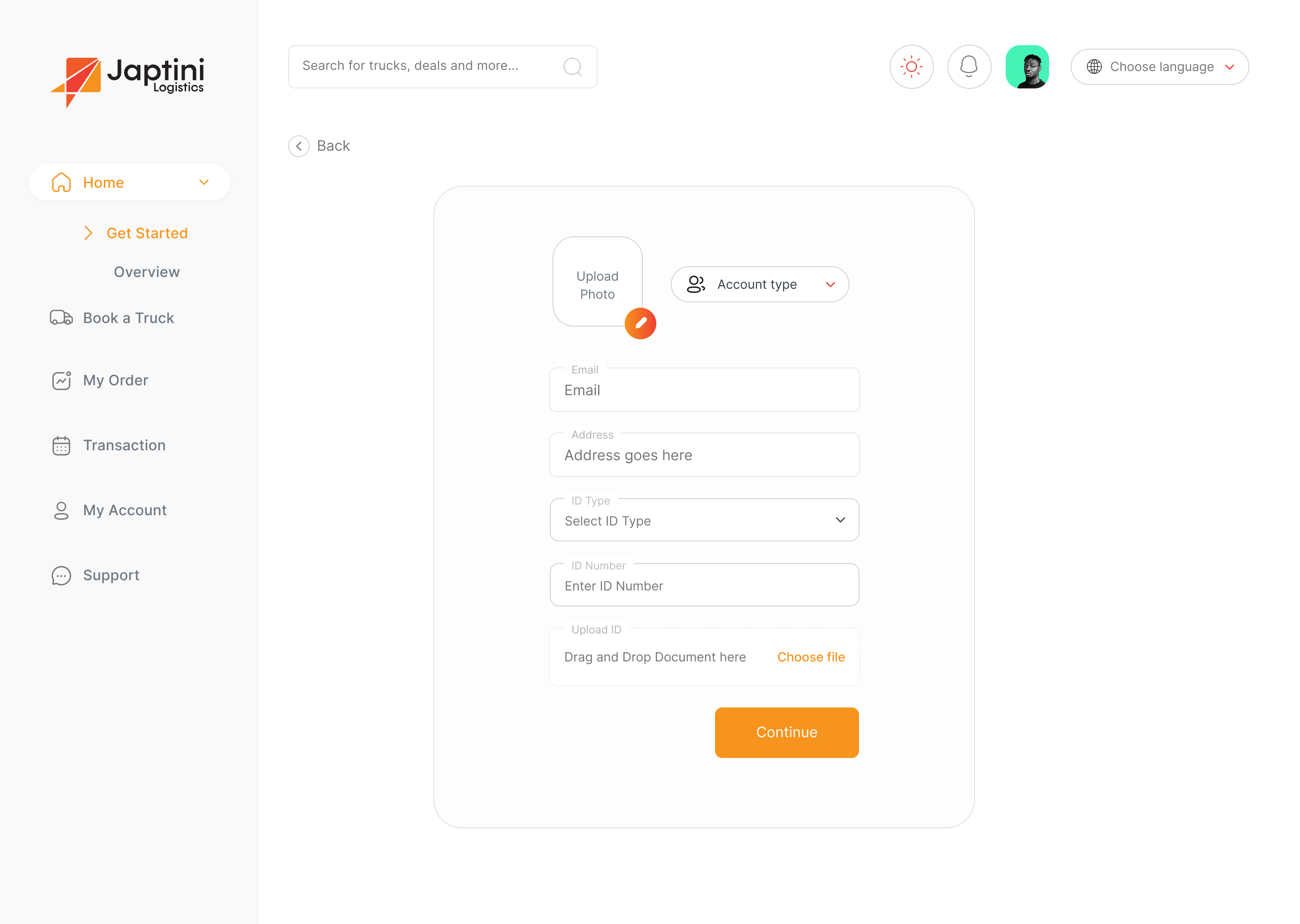
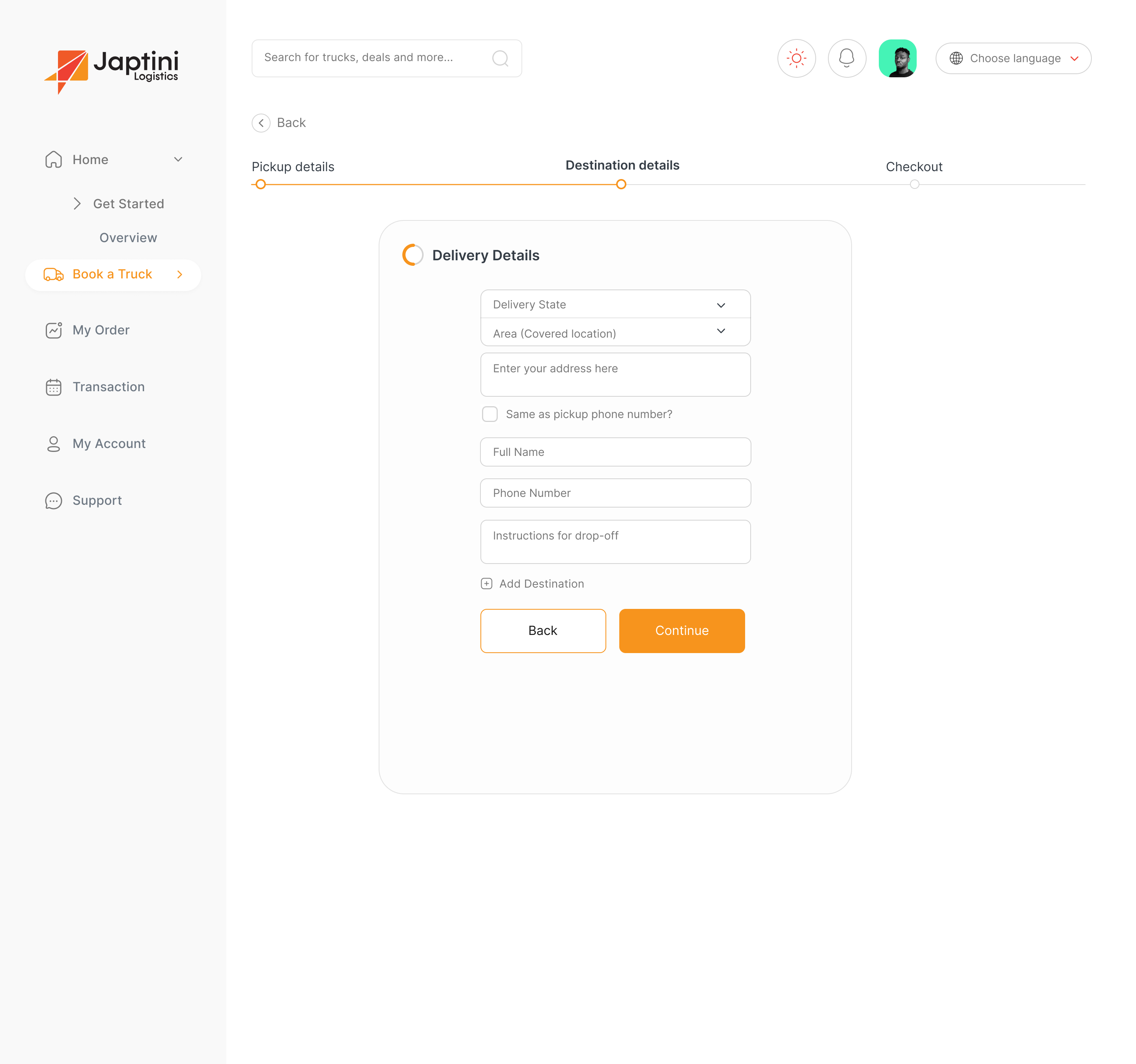
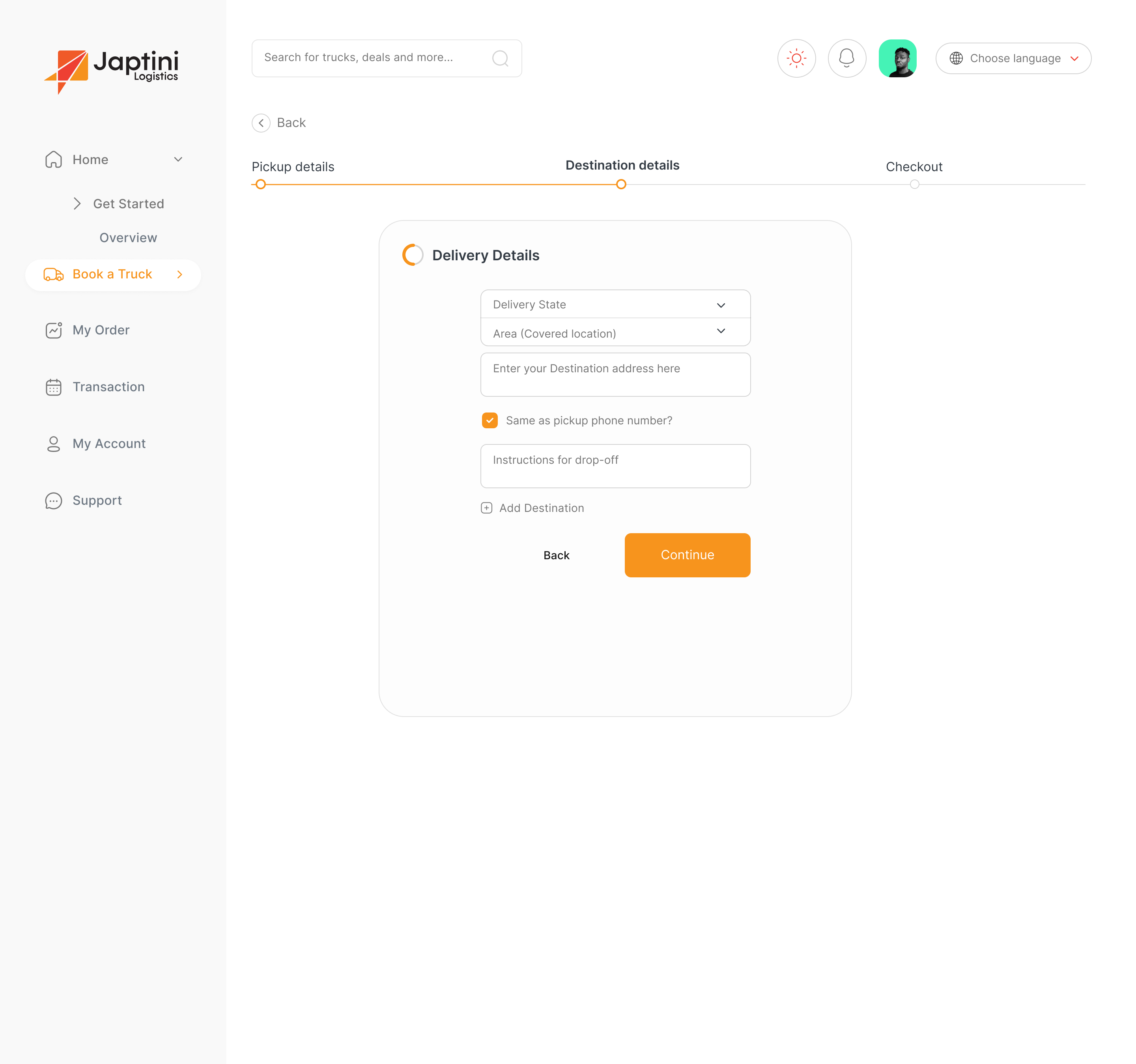
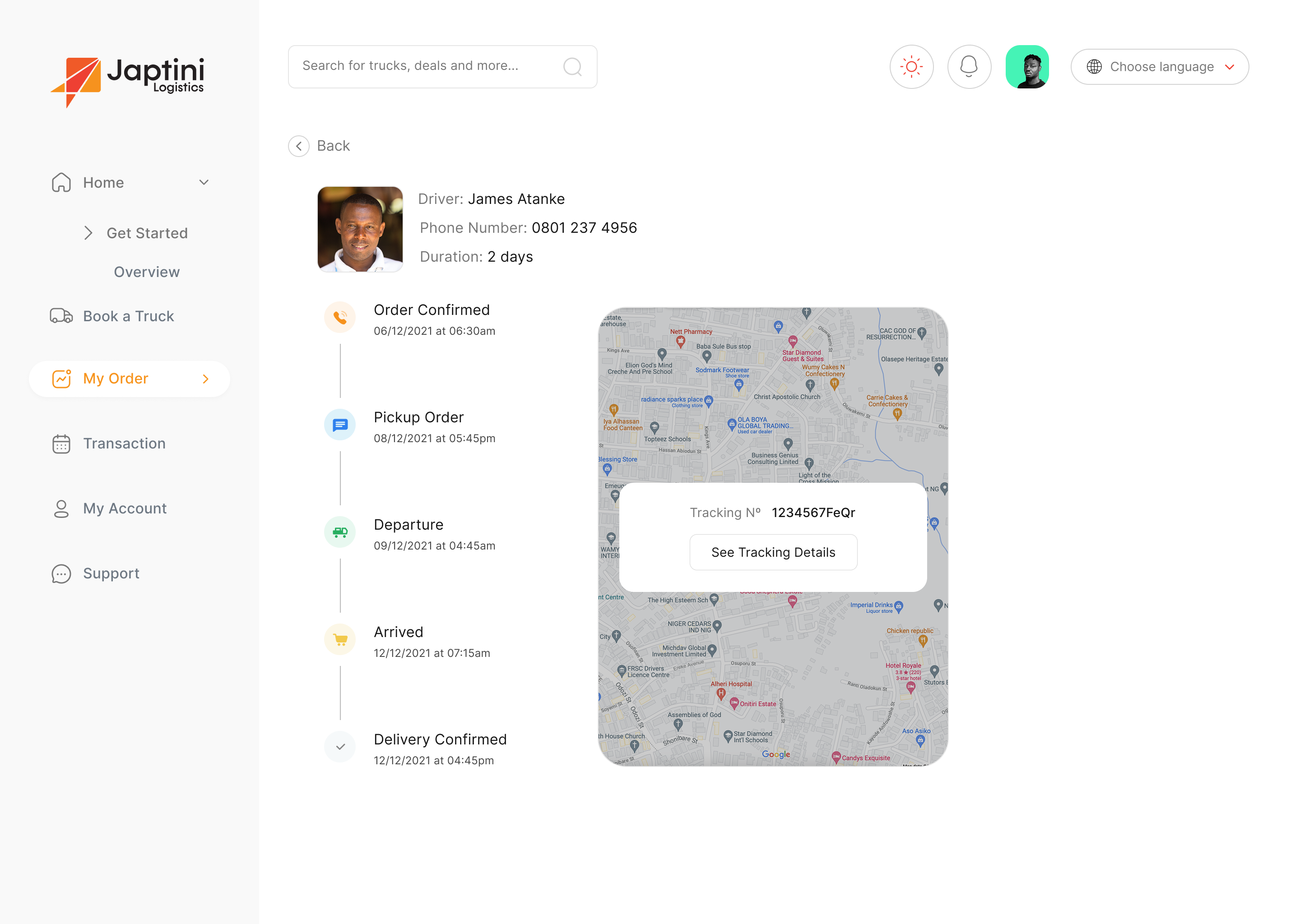
The same product.
Three screen sizes.
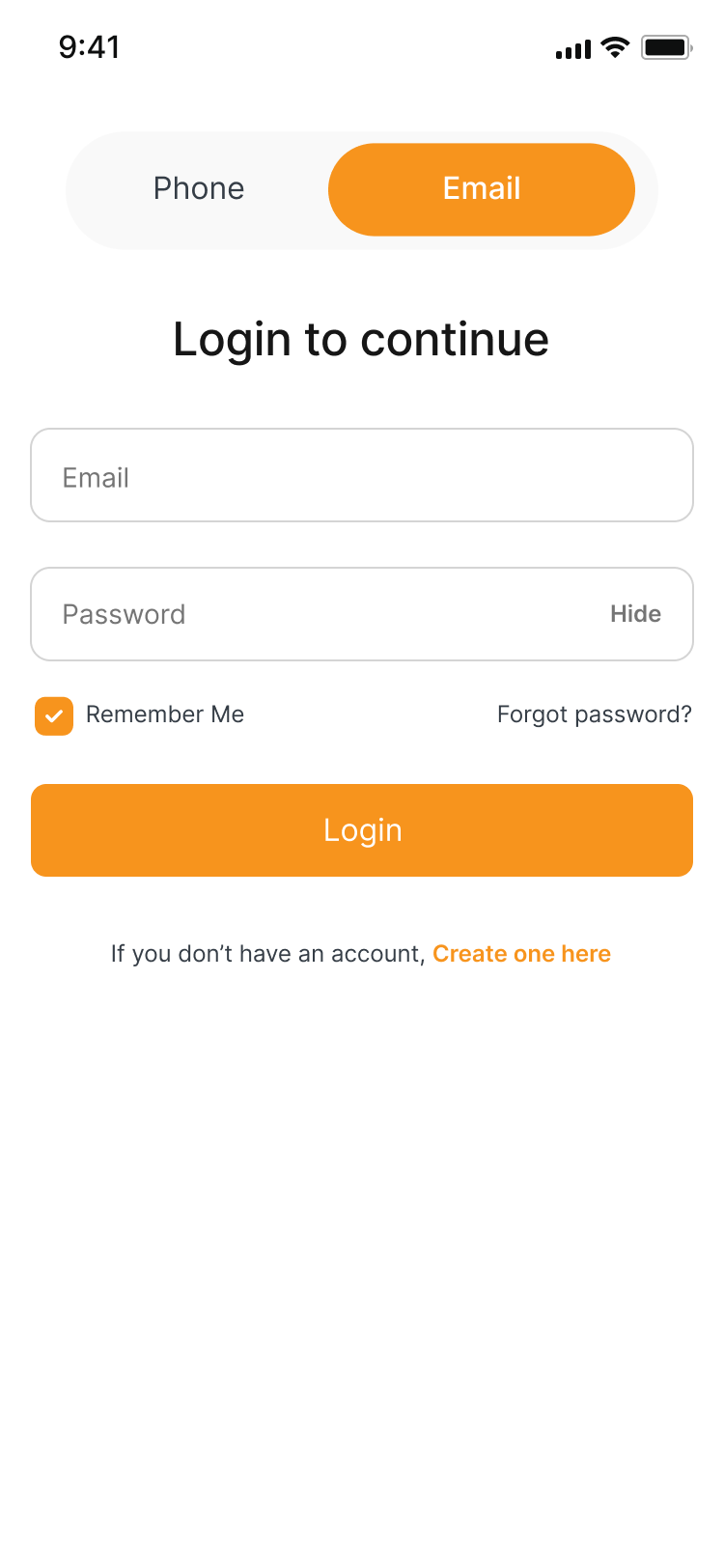
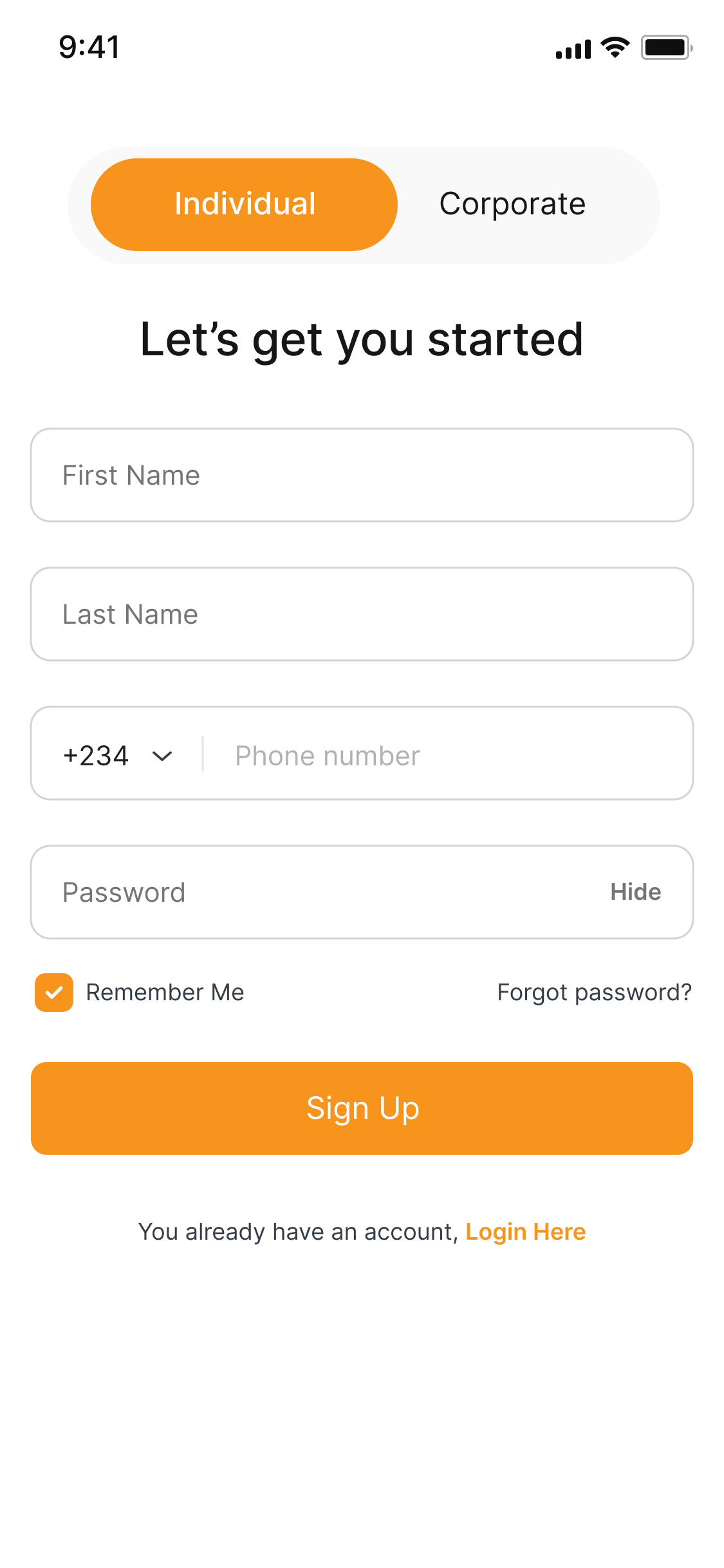
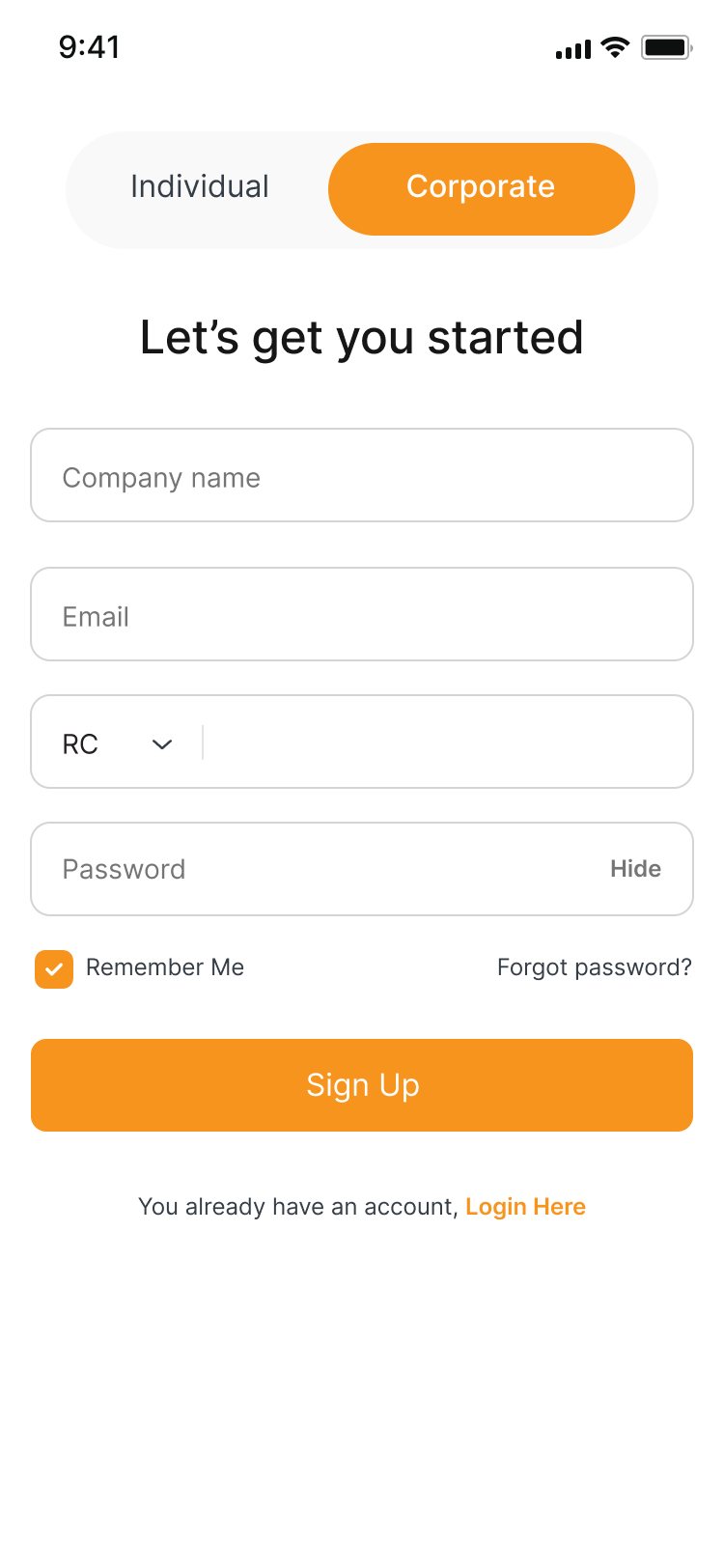
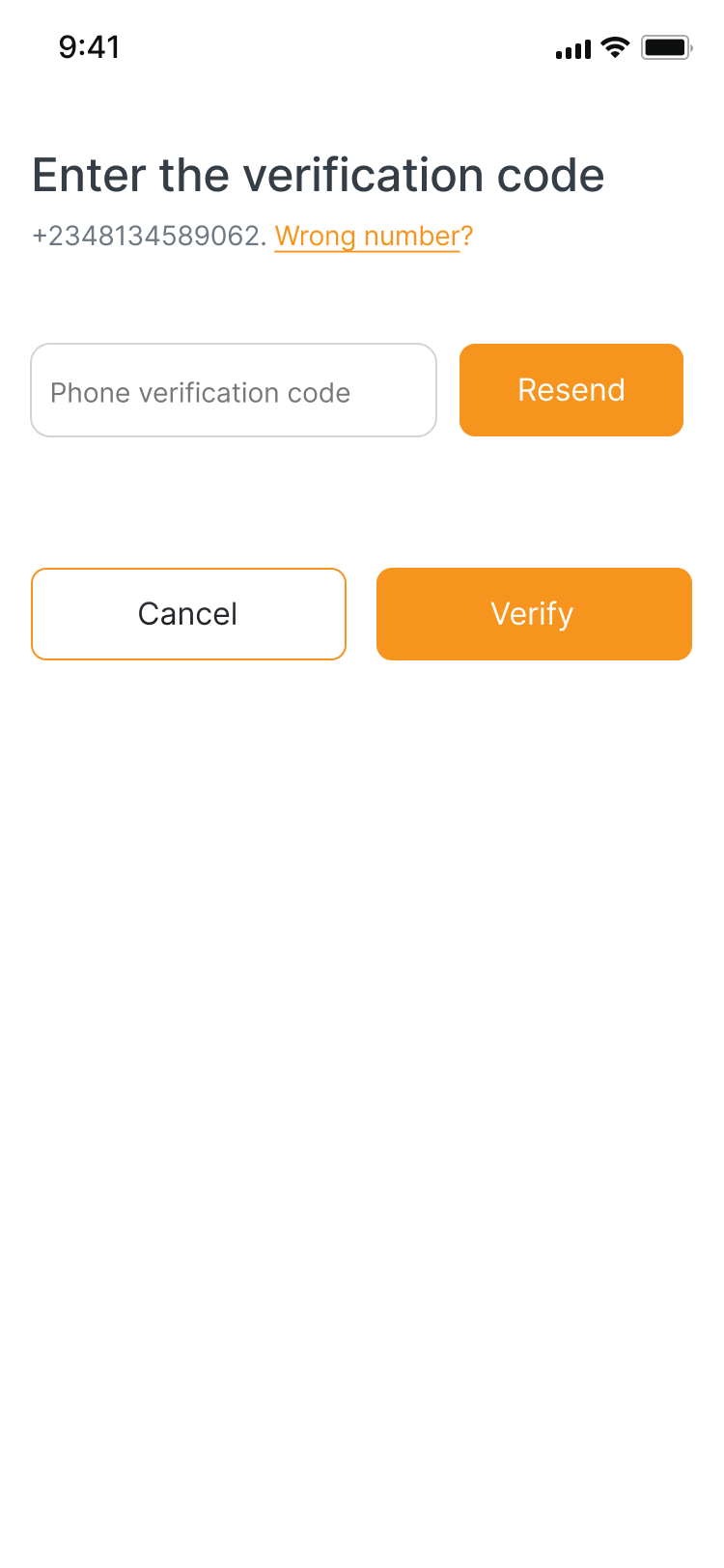
The same authentication experience optimised for mobile. Real users access Japtini from the field.
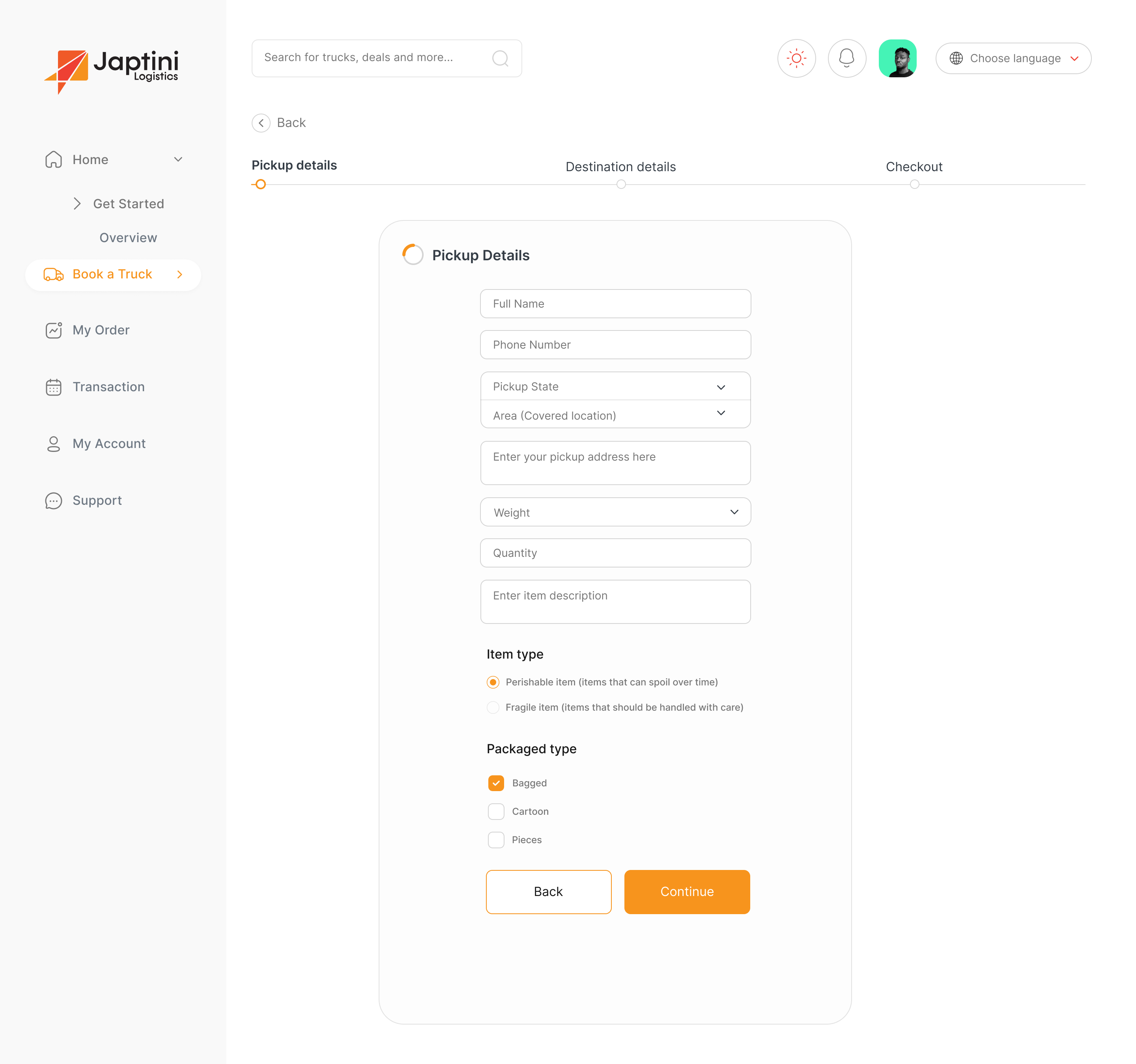
Cargo visibility on demand.
Corporate clients book trucks, track shipments in real time, and manage their full account without a single phone call. From individual users to enterprise procurement teams.
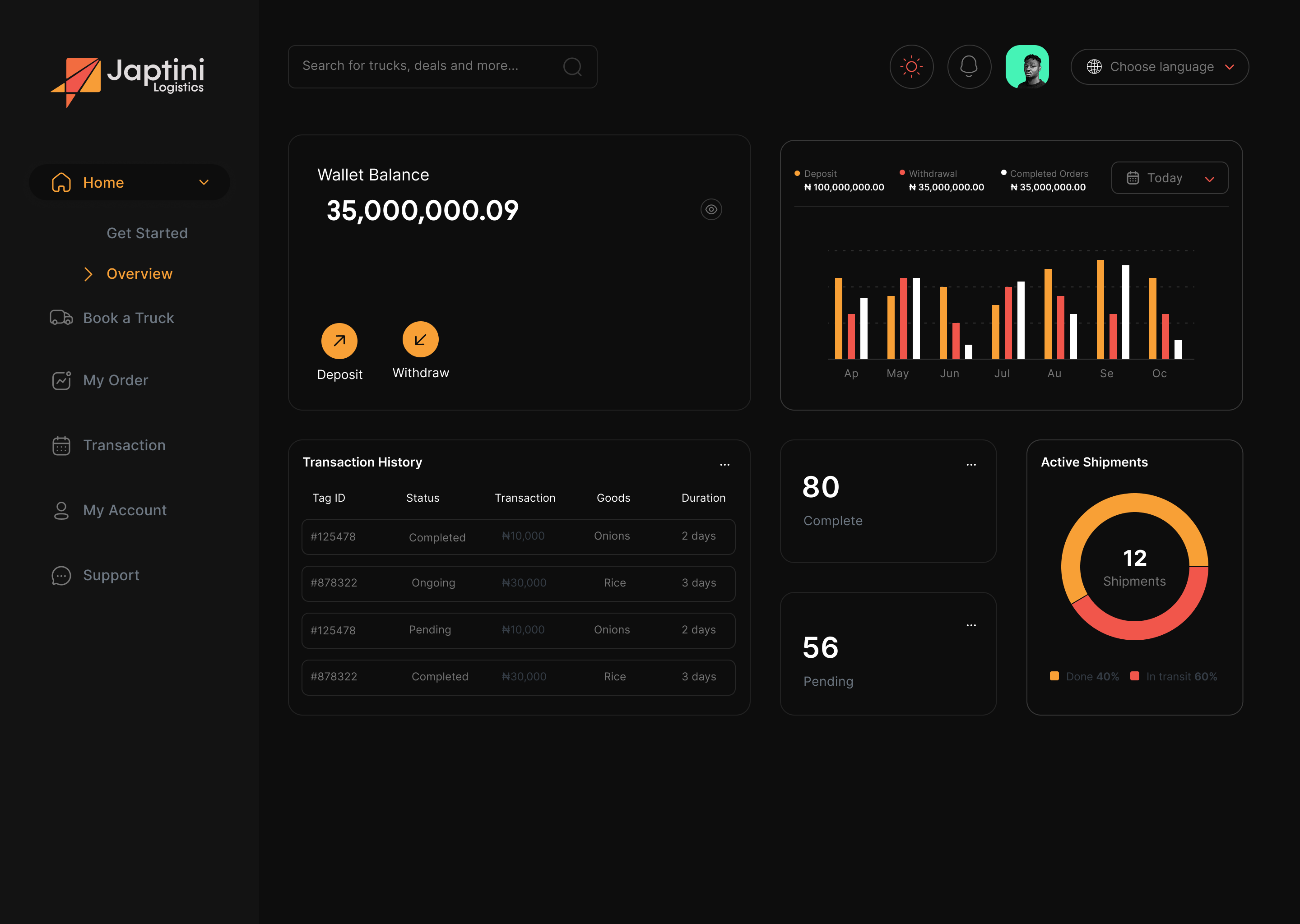
Accept jobs. Track money. No friction.
Truck owners receive jobs, manage their fleet, and track earnings from the road. Designed for one-handed use in low-connectivity environments across Nigeria and Kenya.
Light Mode
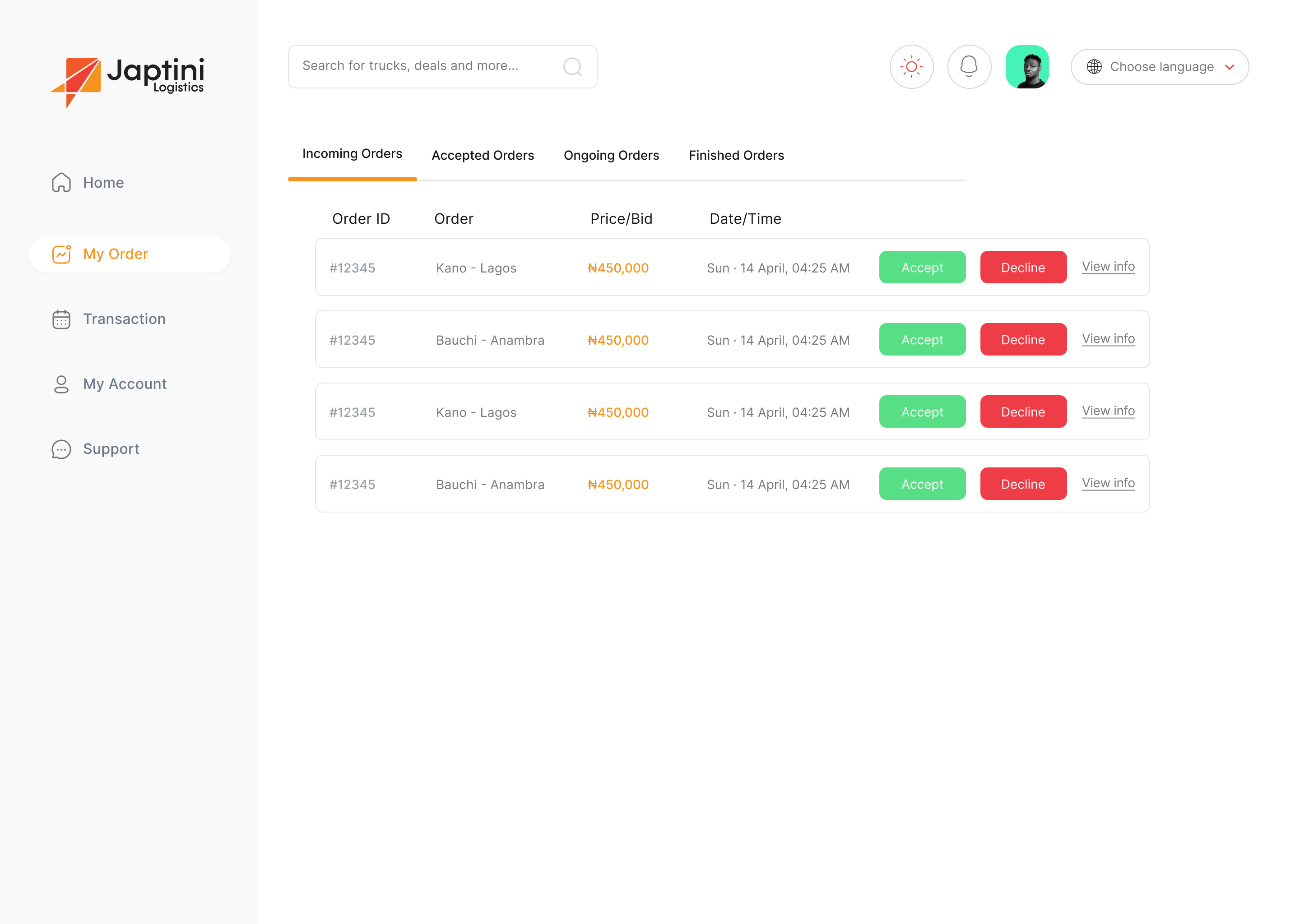
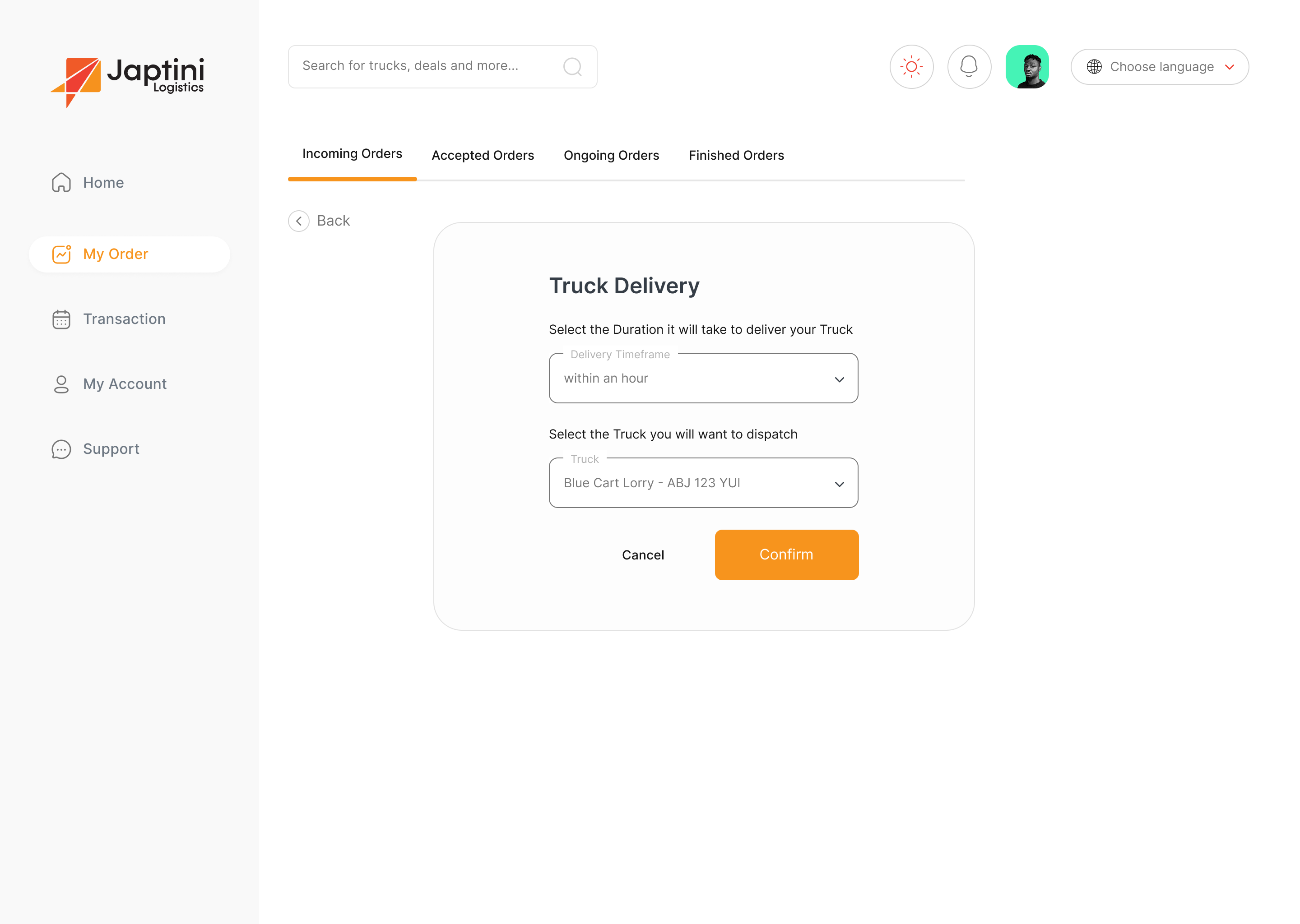
Total visibility across every order.
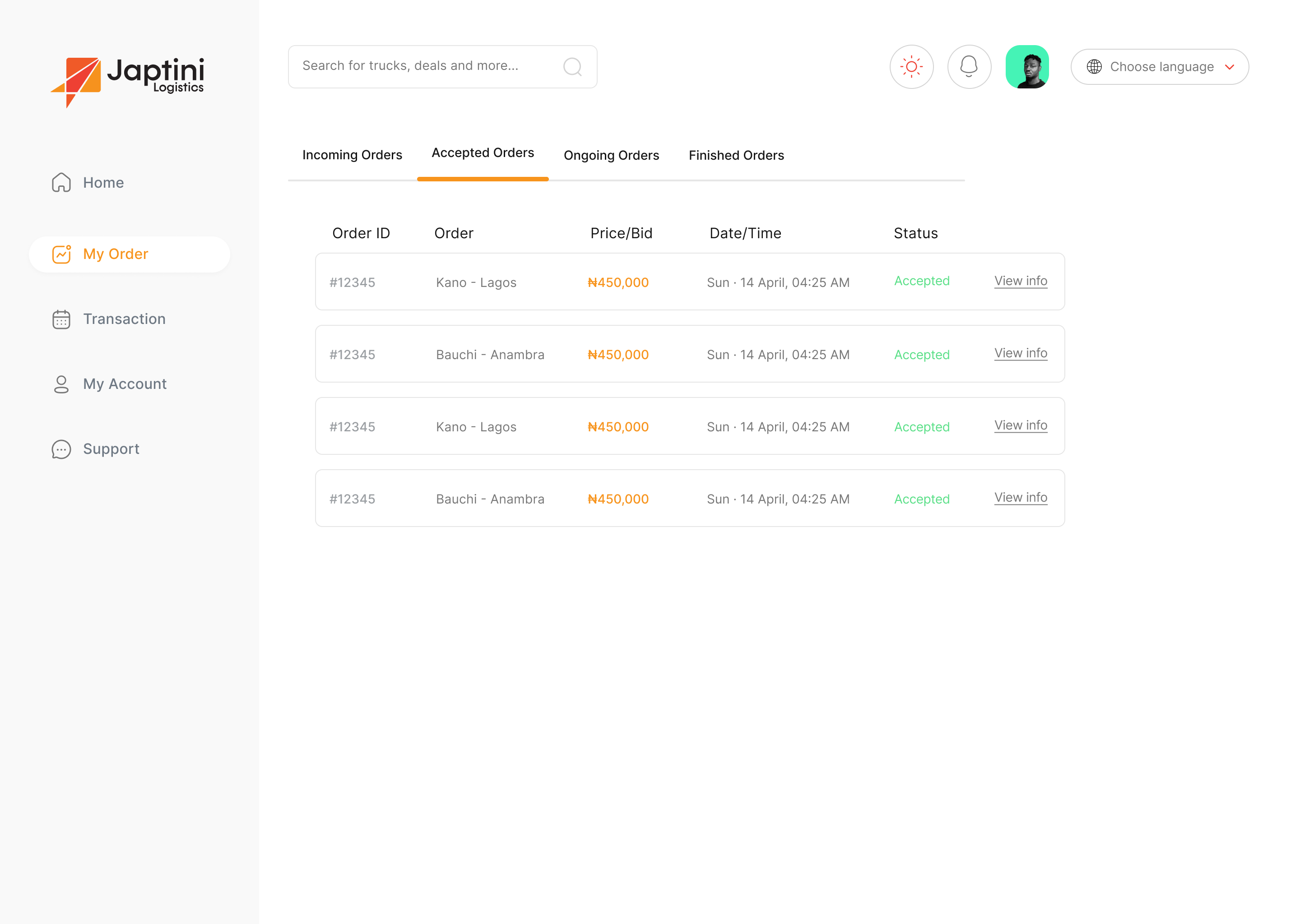
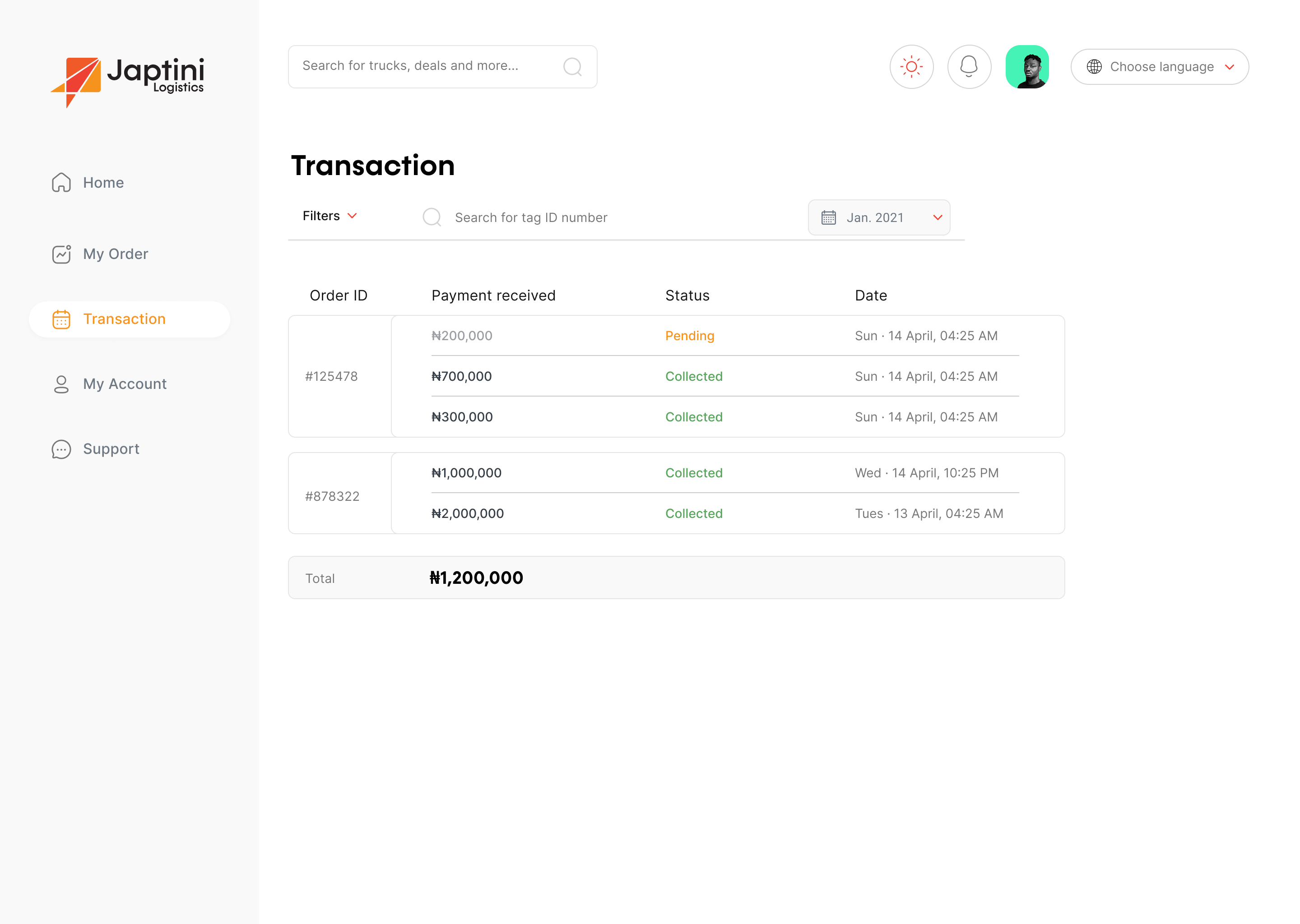
Seven department views, each scoped to exactly what that role needs. Finance, Customer Service, Logistics, HR, Admin, Account Officer, and Offloading Clerk.
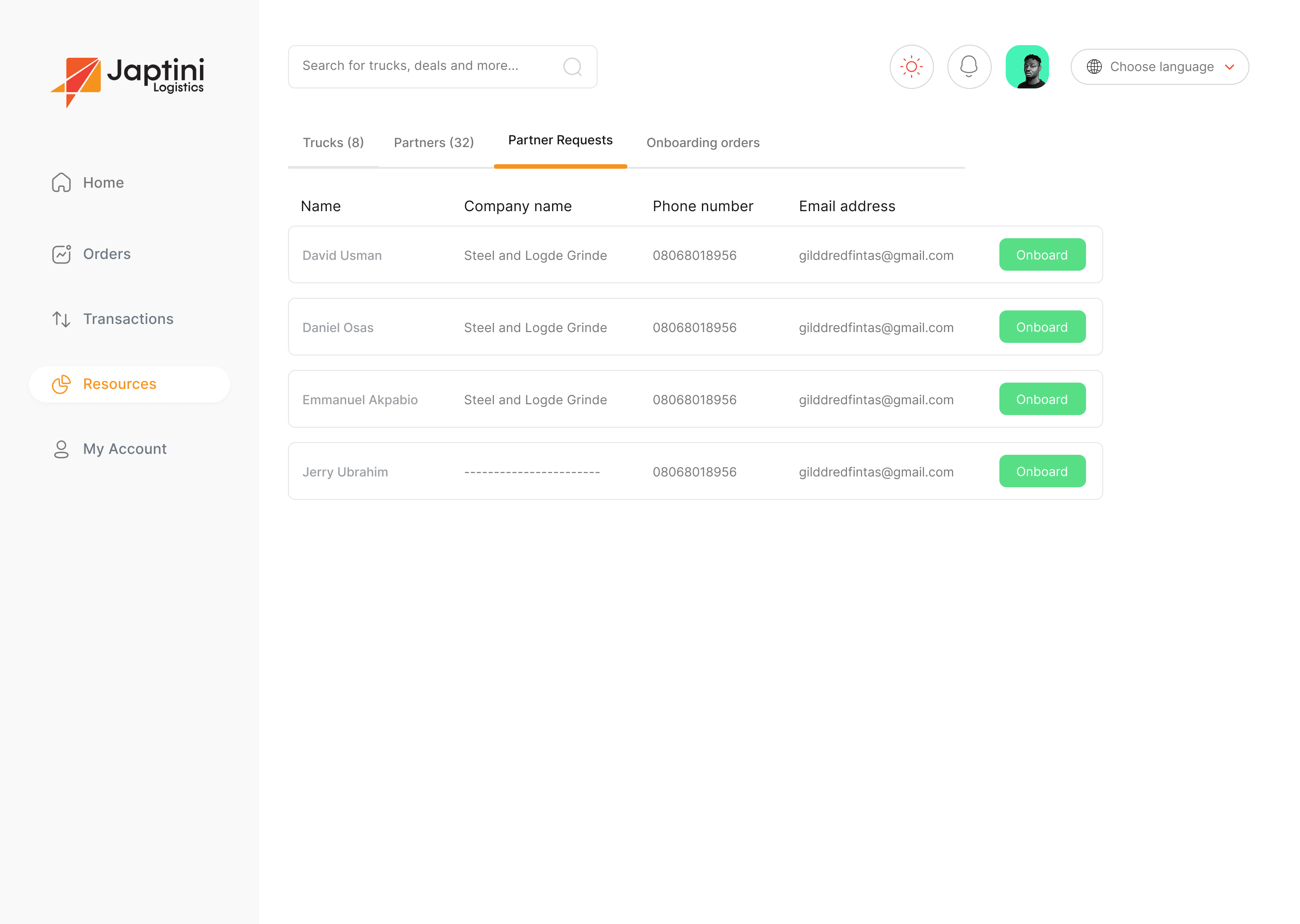
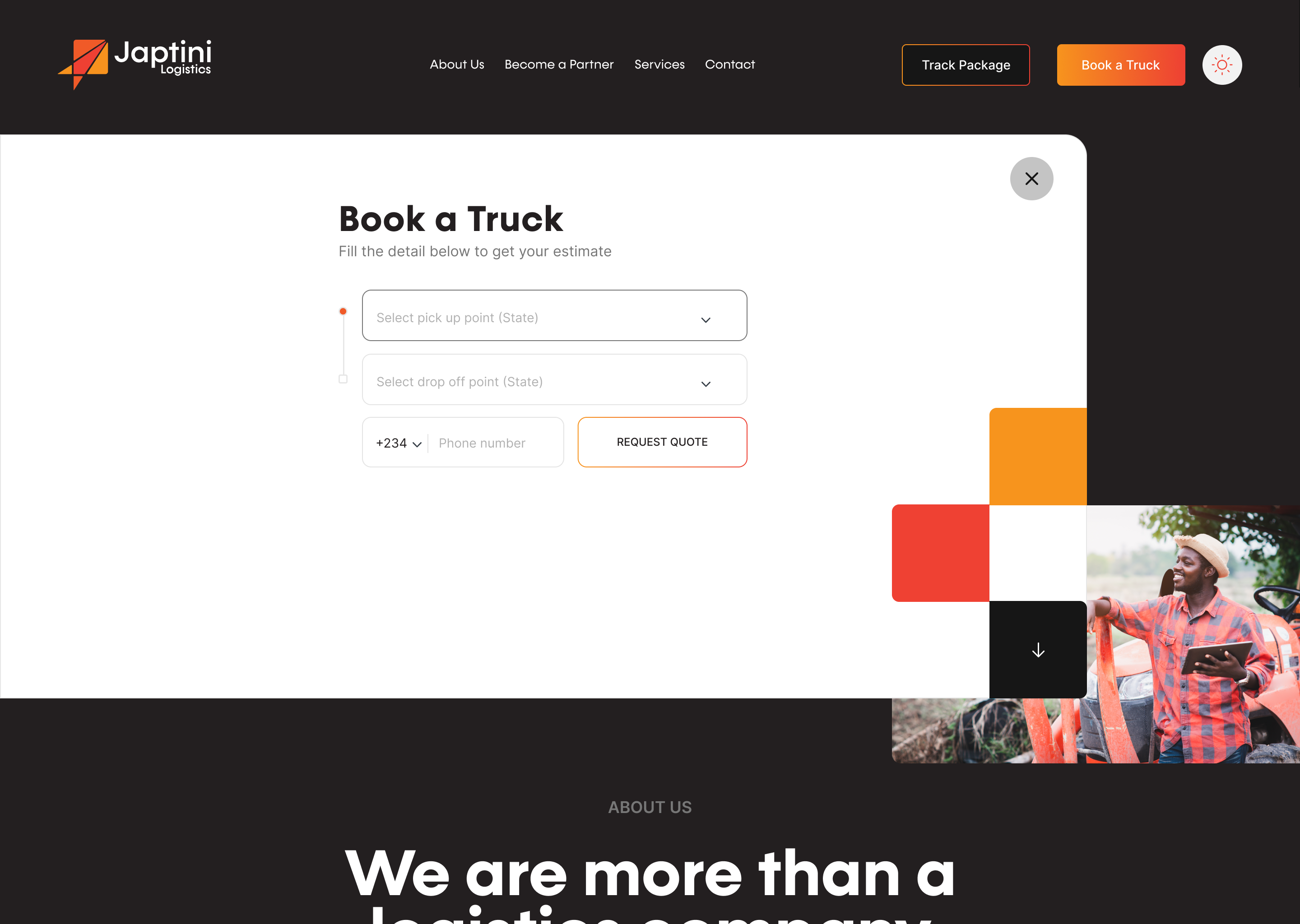
One website. Two completely different audiences.
Japtini's website had to serve two completely different audiences: corporate procurement managers evaluating a logistics partner, and truck owners deciding whether to register their fleet. The same landing page. Two different conversion goals. The design hierarchy leads with trust signals for enterprise clients while keeping the partner onboarding path accessible and direct.
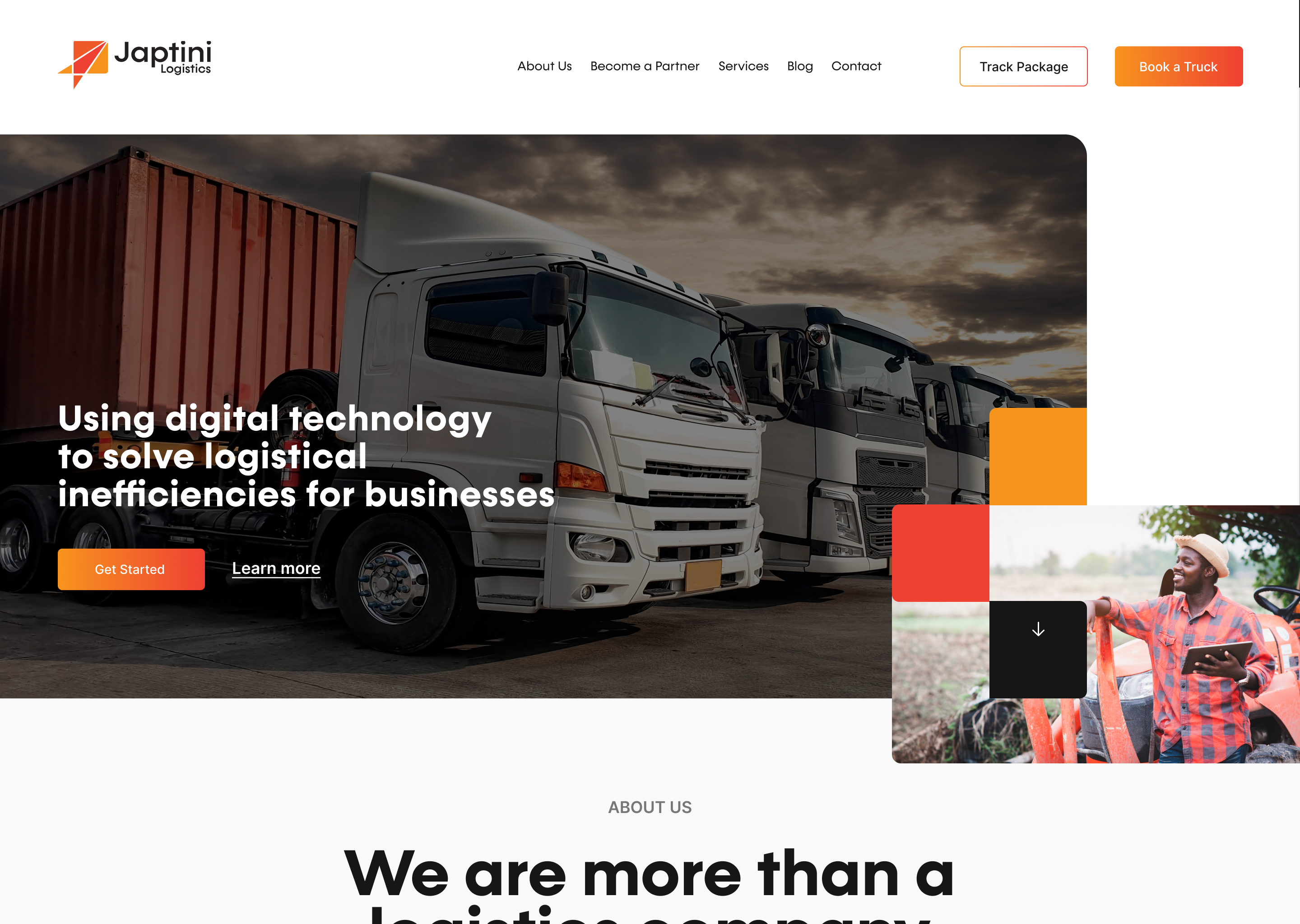
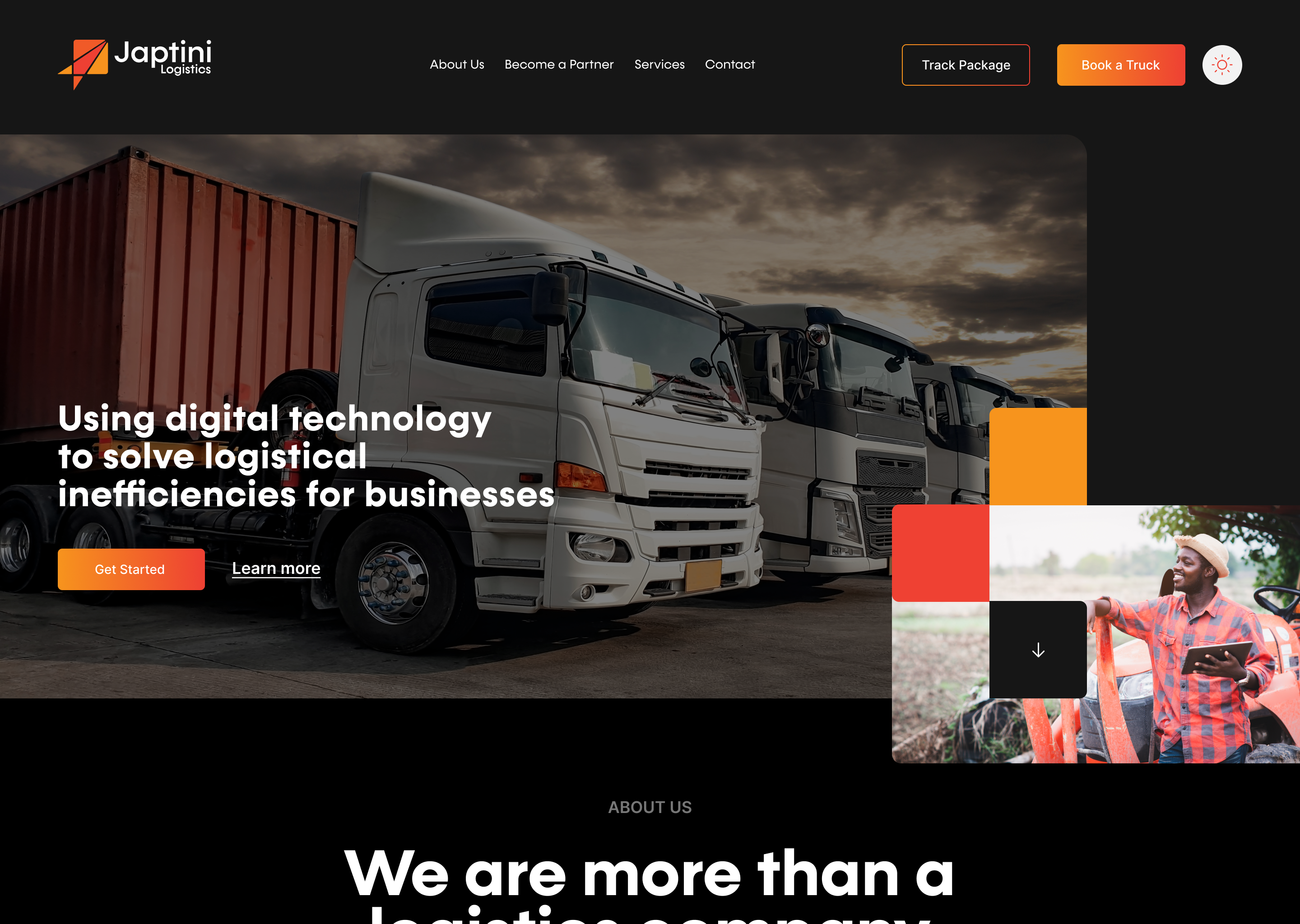
Light Mode
Dark Mode
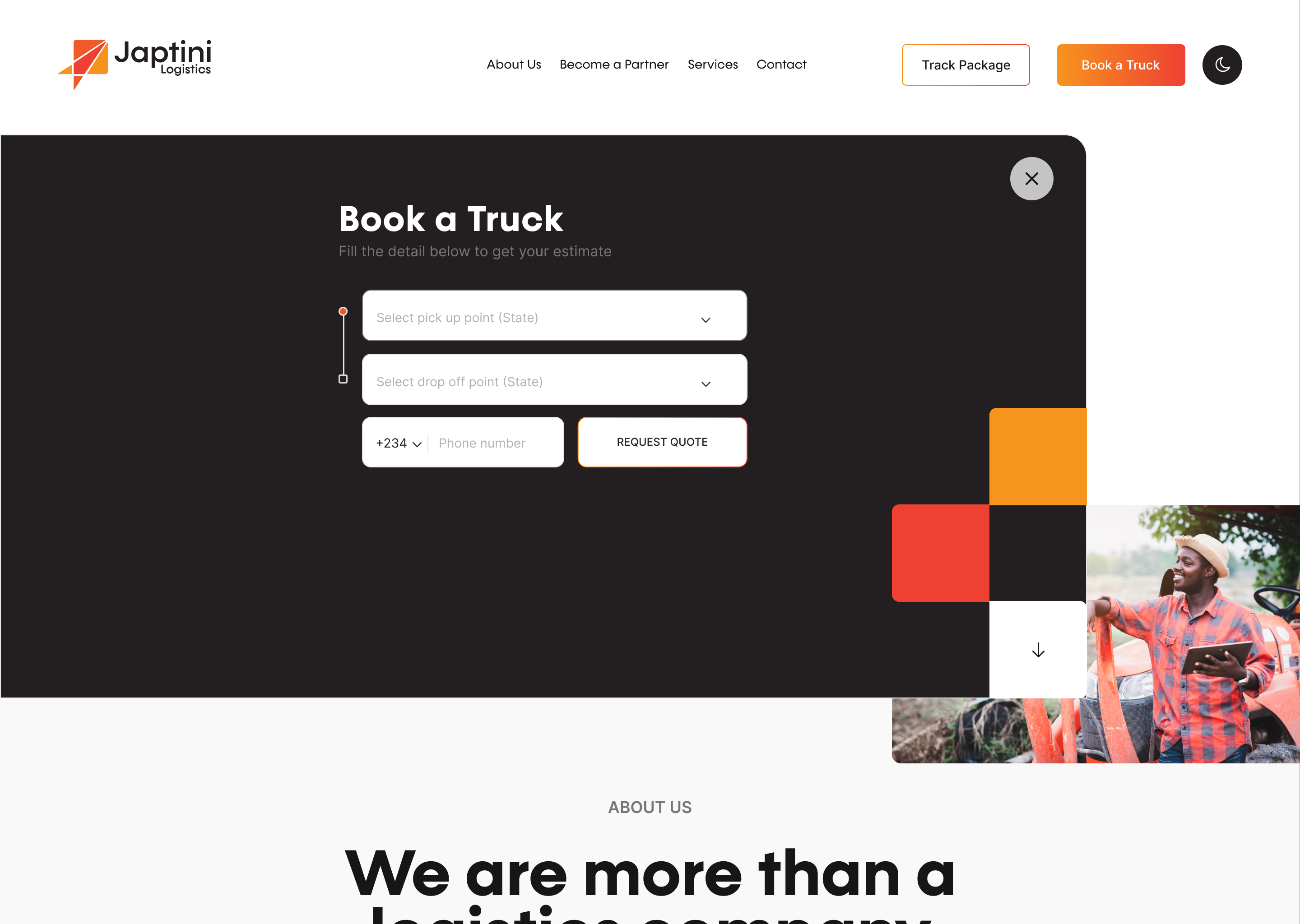
Light Mode
Dark Mode
Five decisions that
defined the system.
Atomic Design from scratch
With 400+ screens across three platforms, we built a shared component library in Week 1. Without it, inconsistencies would compound faster than we could design.
IA before Figma: 3 weeks
Three weeks of whiteboarding before a single frame was opened. Multi-sided systems break when flows conflict. Architecture had to be solved first, visuals second.
V2 dispatch redesign
Post-launch field research revealed one specific failure: drivers couldn't distinguish confirmed from pending jobs. V2 fixed exactly that, and nothing else.
Seven roles. Not one filter.
The CRM wasn't a single dashboard with permissions toggled on and off. Each of the seven roles got a purpose-built view: right data, no noise, no workarounds.
Designing for failure
Low connectivity is the baseline in field logistics, not the edge case. Every critical action (job acceptance, order status, location update) worked offline or degraded gracefully.
Then we went back.
After V1 went live, truck owners were abandoning the app mid-job. The problem was specific: drivers couldn't tell if a job was confirmed or still pending, so they called the dispatcher, defeating the entire purpose. V2 redesigned the dispatch confirmation flow with explicit status language, push notifications, and an in-app thread that replaced the phone call entirely.
Dispatch confirmation flow redesigned. Pending and confirmed states made visually unambiguous. In-app messaging replaced dispatcher phone calls.
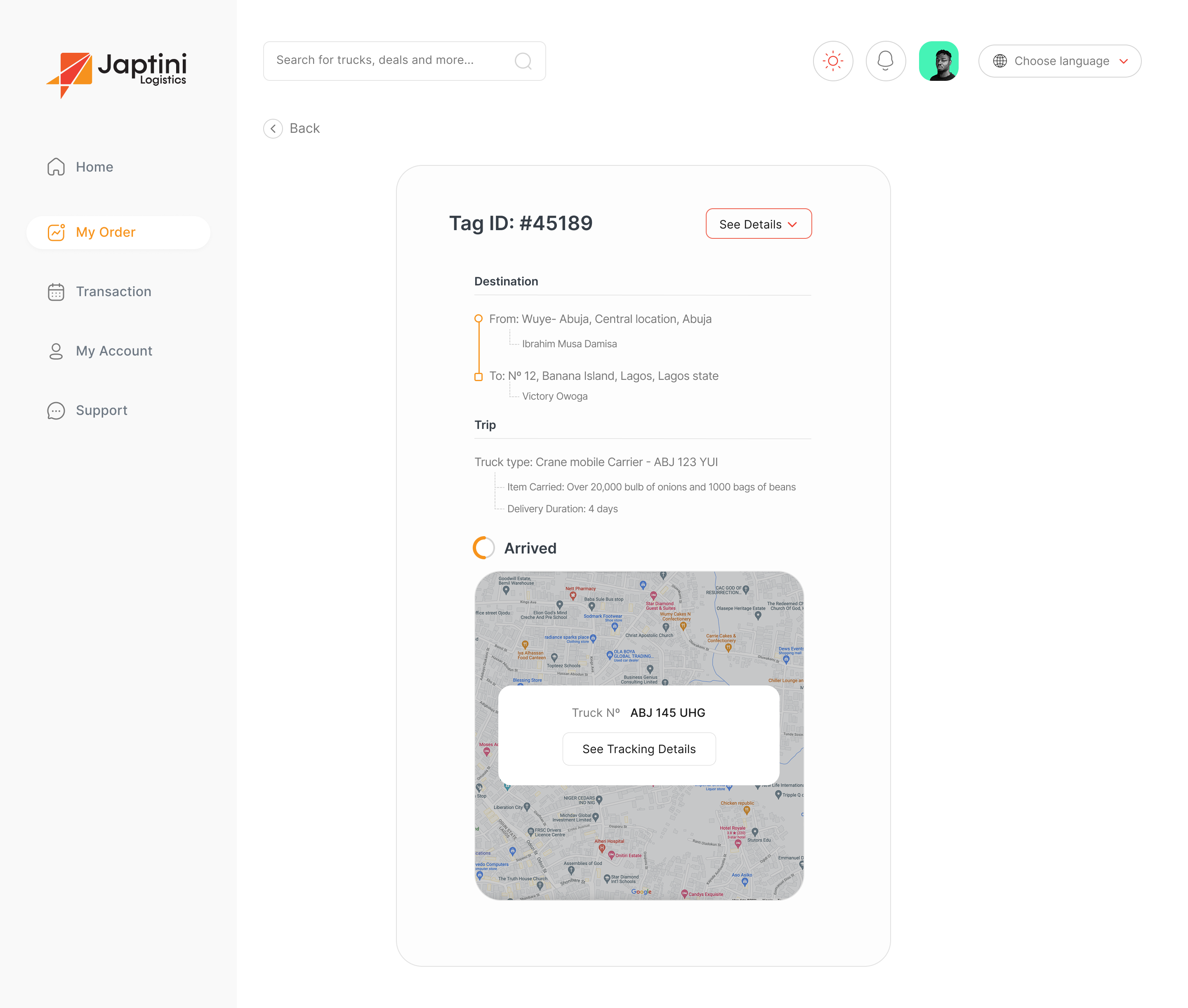
V2: redesigned dispatch confirmation flow
The dispatch problem
we didn't find in research.
Shipped to Real Users
Both platforms launched commercially, operating across Nigeria and Kenya with real clients, real truck owners, and real shipments.
Designed for Field Reality
Offline-tolerant interactions and one-handed mobile design for truck owners operating in low-connectivity environments.
Six Departments. One System.
Role-based CRM access eliminated permission conflicts across 8 user types in a single coordinated platform.
Three principles
this project proved.
Infrastructure constraints are a design brief: Low connectivity, one-handed use, feature phones. These weren't edge cases to design around. They were the environment. Every interaction had to work inside them, not despite them.
V1 launch was a research event: We didn't ship V1 and move on. We shipped and went back. The dispatch confusion that triggered V2 was invisible in testing. It only surfaced when real drivers used it in real conditions.
400+ screens isn't a vanity number: It's what happens when you design honestly for seven roles across three platforms. Scope is a product of complexity, and complexity here was the problem we were hired to solve.
Interested in how I approach product work?
Book a 20-min intro call, or send the role details by email.